Kassiopi and Erimitis
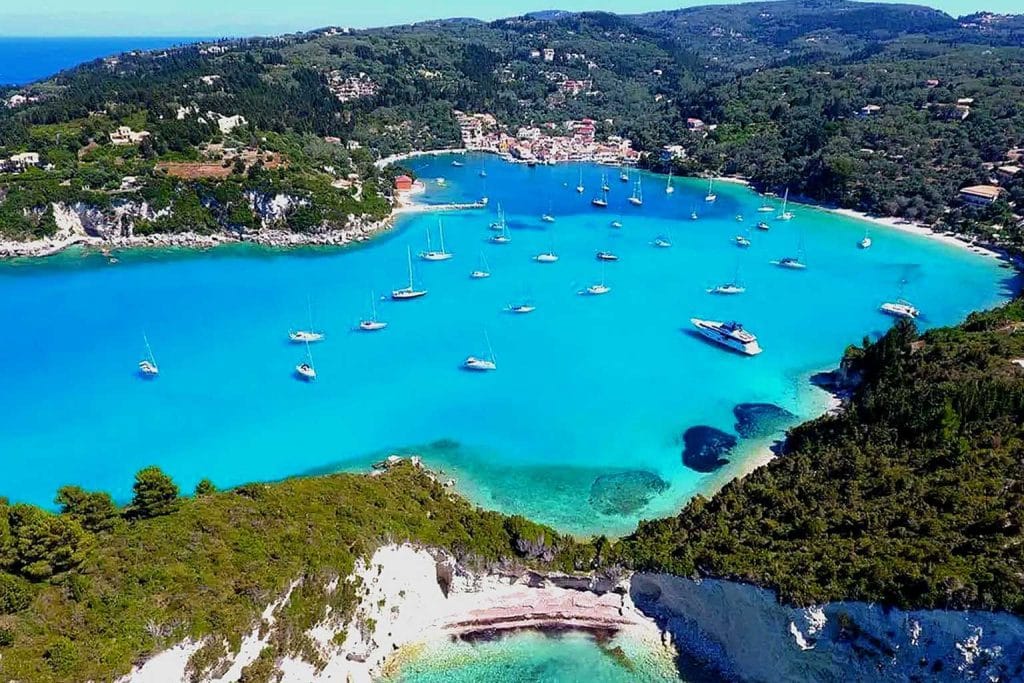
On the northeastern coastline of Corfu, where the verdant hills gently slope down toward the crystal-clear waters of the Ionian Sea, lie two places of great importance to the island: the traditional village of Kassiopi and the natural ecosystem of Erimitis. This region, apart from being a popular tourist destination, stands as a living testament to the harmonious coexistence of culture, nature, and history, preserving its authentic identity unchanged through the centuries.
Kassiopi is one of the most historically significant settlements on Corfu. Located approximately 36 kilometers northeast of the island’s capital, it is today one of the most frequented destinations for both Greek and international visitors. However, its history stretches deep into antiquity. Ancient Kassiopi was a prominent maritime stop as far back as the Roman era. It is said that Emperor Nero paused here during his return from a campaign in Greece. In antiquity, the area was home to a temple dedicated to Zeus Kassios (or Cassius Zeus), from whom, according to one theory, the village gets its name.
Where Ancient History, Cultural Identity, and Fragile Nature Converge on Corfu’s Northeastern Coastline Amid Calls for Sustainable Protection and Heritage Preservation
From the Middle Ages to the Venetian Era
During the Byzantine and Medieval periods, Kassiopi retained its strategic importance due to its location across from the coasts of Epirus and Albania. From that era, one can still see the ruins of Kassiopi Castle, perched on a hill next to the harbor. The castle likely dates back to before the 12th century and formed part of the defensive network of Corfu during the Byzantine and later Venetian times. Although now in ruins, it remains a significant historical monument and a point of interest for visitors.
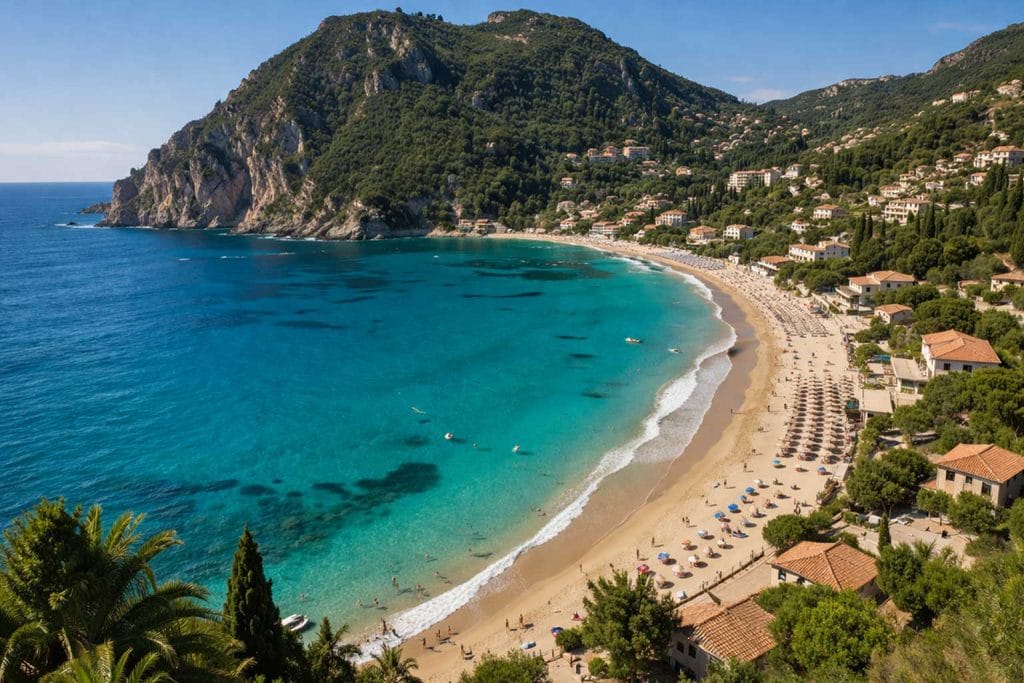
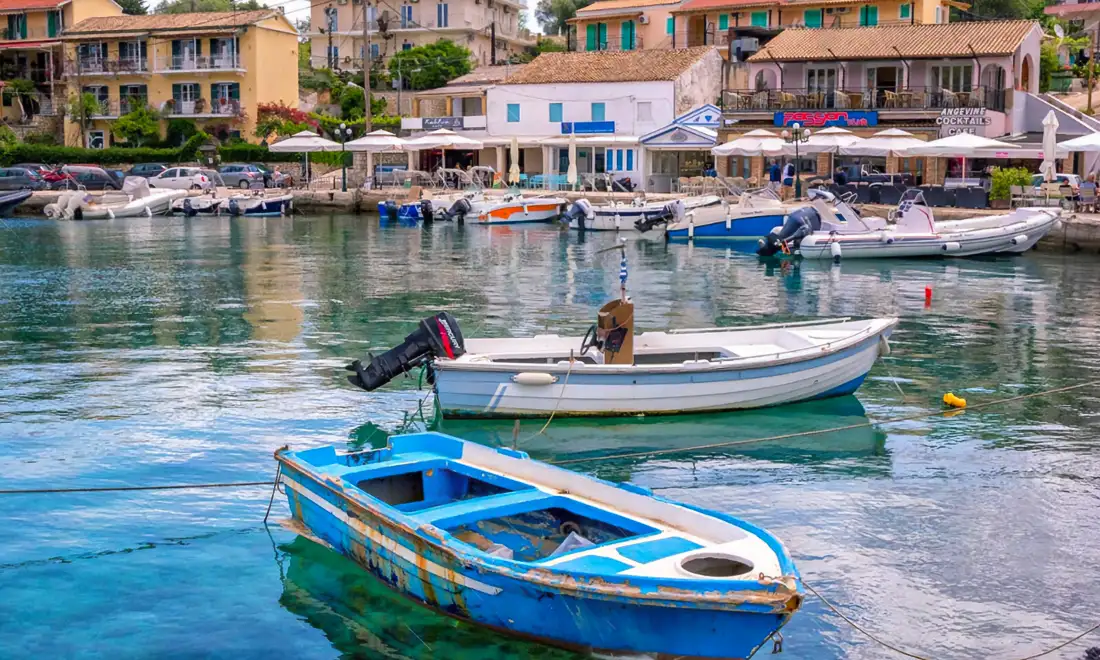
Modern Kassiopi maintains its traditional character, with narrow, winding alleyways, old manor houses, small village squares, and a picturesque harbor where fishing boats and tourist vessels are moored. The atmosphere of the village is both serene and cosmopolitan, particularly during the summer months, when it fills with travelers enjoying the natural beauty and the warm hospitality of the locals. Along the coastal stretch of Kassiopi, one will find cafés, tavernas, shops, and several pebble beaches with exceptionally clear waters, such as Kanoni Beach and Bataria Beach. Most of these beaches are within walking distance from the village center and offer stunning views across the Ionian Sea and toward the Albanian shoreline.
Additionally, Kassiopi serves as an excellent base for boat excursions to other coastal villages and secluded beaches. There are numerous options for accommodation ranging from luxurious villas to family-run rental rooms, catering to a wide variety of visitor preferences.
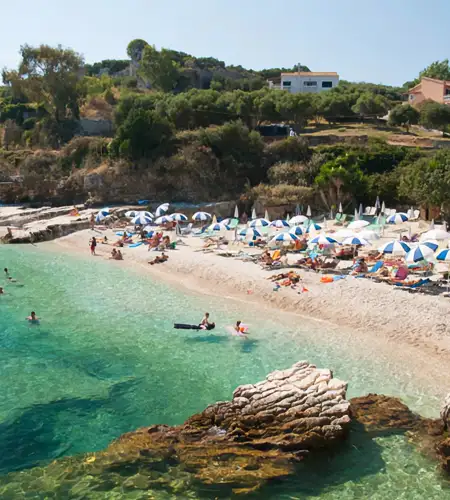
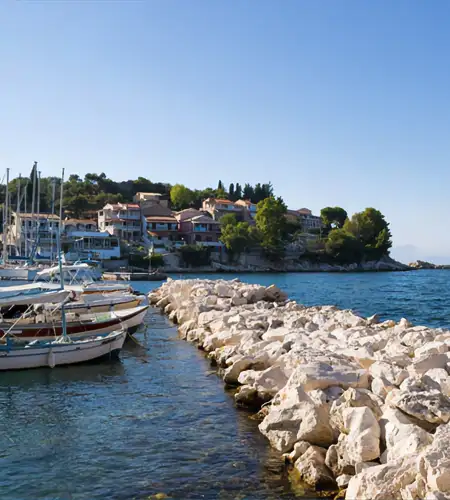
Just a short distance southeast of Kassiopi lies one of Corfu’s most precious natural areas Erimitis. This is a rare and sensitive ecosystem made up of forests, lagoons, beaches, and coastal land, covering approximately 60 hectares. Erimitis has been described by many as the “last untouched paradise” of Corfu.
The ecosystem of Erimitis includes three small lagoons Vromolimni, Akoli, and Savoura which are home to a rich array of birdlife and aquatic species. The local flora is equally diverse, consisting of dense Mediterranean vegetation including olive trees, mastic shrubs, arbutus, oaks, myrtle, and aromatic herbs. A network of footpaths weaves through Erimitis, allowing visitors to explore the unspoiled landscape and access remote beaches with exceptionally clean waters. Among these is the beach of Avlaki, known for its white pebbles and transparent waters. It can be reached either by car and trails or by boat and is a perfect destination for those seeking tranquility and isolation.
Erimitis is a region of high ecological value, serving as a refuge for bird species, amphibians, and insects. It forms part of the European Union’s Natura 2000 network and is recognized as an important habitat. However, in recent years, the area has become the subject of heated debate and public controversy due to attempts at privatization and tourism-driven development through large-scale investment projects. Proposals to build a luxury resort complex threaten to alter the ecosystem irreversibly and could restrict public access to nature. These plans have sparked opposition from local communities, environmental organizations, and scientists, all of whom stress the importance of preserving Erimitis as a public natural resource. The struggle to protect this unique area goes beyond local concerns, touching on broader issues of sustainable development and respect for natural heritage.