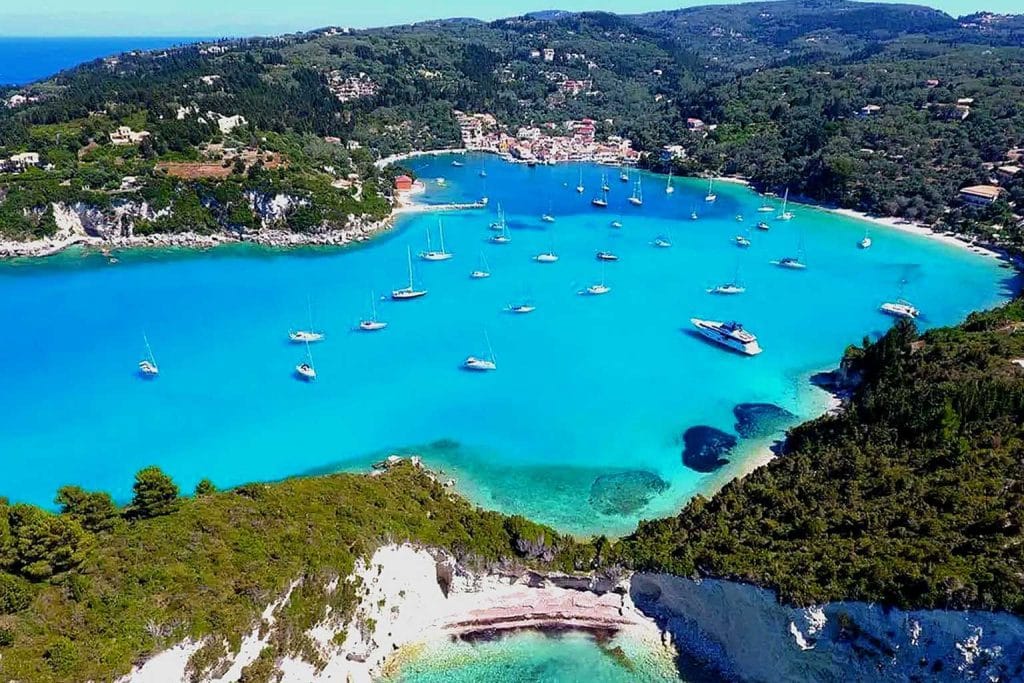
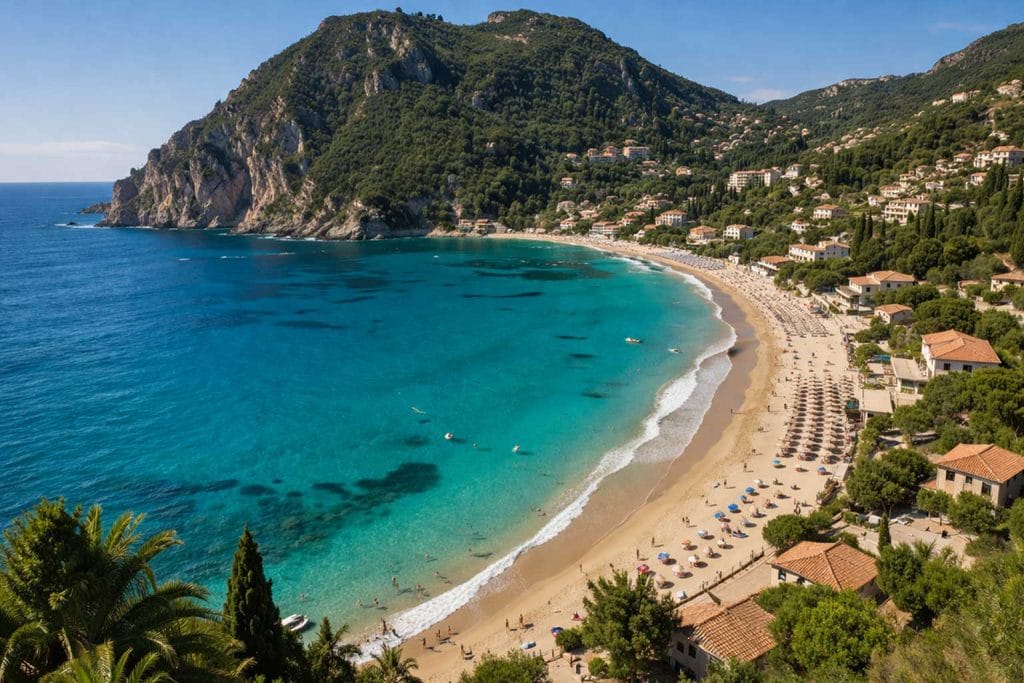
Liapades and Rovinia Beach
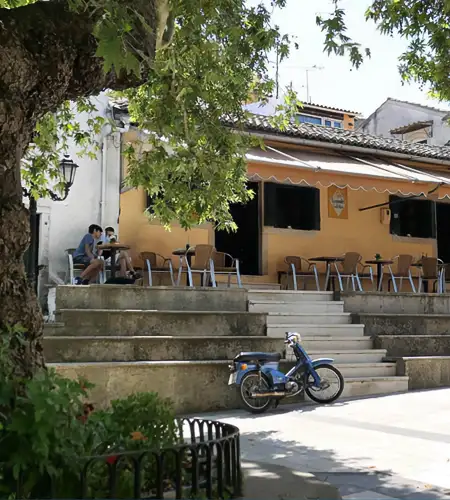
Liapades is one of the oldest and most authentic villages on the western side of Corfu. Located approximately 20 kilometers from the island’s main town, the village is built on a lush hillside, offering expansive views of both the Ionian Sea and the island’s inland landscape. Liapades has managed to preserve its traditional character, with narrow cobbled alleyways (kantounia) that appear untouched by time, and houses made of stone and clay tiles, adorned with flower-filled courtyards where basil, jasmine, and bougainvillea flourish.
The village is divided into two parts, the old and the new. In the old village, visitors will find striking examples of Venetian and Ionian architecture. The historic churches scattered throughout Liapades stand as cultural and architectural landmarks. The eras of Venetian and British rule have left a strong imprint on the region, influencing its language, music, and urban layout. In the past, the local economy revolved primarily around agriculture and fishing, with notable production of olive oil and wine. One of the most distinctive products of the area is a dry wine made from a grape variety called kakotrygis, known for its unique aroma and taste. This wine remains an integral part of local culture and is often enjoyed during festivals and traditional celebrations.
Corfu’s Timeless Village of Venetian Charm, Hidden Coves, Traditional Wine, and Secluded Rovinia Beach Amid Olive Groves and Ionian Coastal Tranquility
A village that combines culture and tourism
Today, Liapades is home to around 900 residents. Although it has seen some degree of tourism development, the village has retained its authenticity to a large extent. It is not a “tourist village” in the sense of mass commercial growth; rather, it is a living, breathing place where locals go about their daily lives and welcome visitors with genuine warmth and hospitality.
Liapades is situated between two striking natural features: to one side lie rolling hills and mountains blanketed with rich vegetation and olive groves, while to the other side, the Ionian Sea unfurls with its steep cliffs and secluded coves. This geographical diversity provides a wealth of opportunities for hiking, photography, nature exploration, and, of course, swimming in crystal-clear waters. The village lies very close to Paleokastritsa, one of Corfu’s most well-known resort areas. However, Liapades offers a much quieter and more understated atmosphere, giving travelers an alternative holiday experience, one that feels more personal and less commercial.
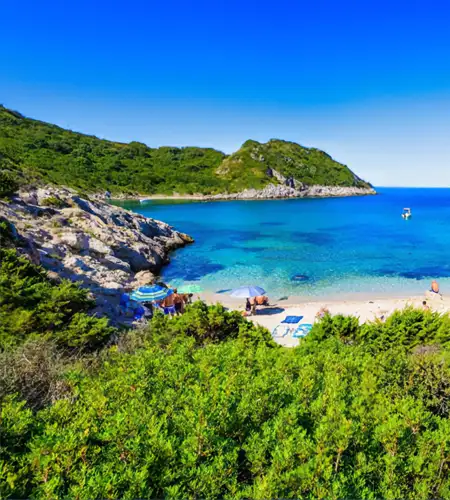
The most famous natural gem in the area is Rovinia Beach. Located about 1.5 kilometers from the village, it sits in a small, secluded bay framed by rocky outcrops and lush green landscapes. Rovinia is a beach covered in white pebbles, with turquoise, impeccably clean waters. The natural surroundings remain untouched, as the beach is not organized there are no sunbeds, umbrellas, beach bars, or facilities. This makes it a perfect retreat for those seeking solitude, peace, and a connection with the natural world. Visitors often describe it as a “hidden paradise,” reminiscent of a tropical island.
Access to Rovinia Beach can be gained in two ways: either via a walking path that begins at the edge of the village and takes around 20–25 minutes to complete, or by sea, using a boat or canoe from nearby beaches. The trail to Rovinia passes through forests and olive groves and is a delightful experience in itself, offering a gradual transition from the human-made environment of the village to the untouched natural beauty of the coast. The area around Rovinia hosts significant biodiversity, including endemic plant species and a rich bird population. The dense vegetation reaches all the way to the sea, forming a rare and beautiful coastal ecosystem that has been preserved thanks to the absence of mass tourism.
Local initiatives are increasingly focused on protecting the region’s natural heritage and promoting alternative forms of tourism such as hiking, cycling, and birdwatching. Some residents have even started offering guided walking tours or wine-tasting workshops featuring local products, supporting a sustainable model of tourism that respects both nature and tradition.