Table of Contents
Cliff jumping represents one of those activities that creates disproportionate excitement and memorable moments relative to the actual time spent doing it. The brief seconds of freefall, the rush of adrenaline as you leap, the splash and submersion into cool water, and the triumphant feeling surfacing knowing you just did something that required genuine courage all combine into experiences that participants remember vividly and recount enthusiastically. For yacht cruisers around Corfu, cliff jumping adds an adventurous element to days otherwise spent swimming, snorkeling, and relaxing, creating those highlight moments that elevate good days into extraordinary ones. However, cliff jumping inherently involves risk, and the difference between thrilling adventure and dangerous recklessness lies entirely in how intelligently and carefully you approach it. With 99knots’ experienced captains guiding you to verified safe locations, providing proper instruction, and monitoring conditions, cliff jumping transforms from potentially dangerous activity into managed adventure that delivers excitement without unacceptable risk.
The yacht-based approach to cliff jumping offers significant safety advantages over the informal jumping that happens at popular spots where tourists simply follow others without understanding conditions or risks. Your 99knots captain knows specific locations personally, understands their characteristics and requirements, verifies adequate depth and clear landing zones before permitting jumping, and provides instruction ensuring proper technique. This professional guidance eliminates the guesswork and peer pressure that lead to injuries at unmanaged locations. You’re not deciding whether a spot is safe based on watching other people survive their jumps. You’re receiving authoritative guidance from someone who’s verified conditions and understands what makes cliff jumping safe versus dangerous. This professional oversight allows you to embrace the adventure’s thrill while minimizing risks through informed decision-making and proper precautions that inexperienced jumpers often skip.
Understanding Cliff Jumping Safety
The fundamental safety requirement for cliff jumping is adequate water depth without submerged obstacles in the landing zone. Minimum safe depth depends on jump height and technique, but generally minimum 4-5 meters for jumps up to 8 meters high, with deeper water required for higher jumps. However, depth alone doesn’t ensure safety. The landing zone must be clear of rocks, reefs, or other obstacles that could cause injury on entry or while surfacing. Water clarity in Corfu generally allows visual verification of bottom conditions, but experienced assessment matters as perspective from above can mislead about actual depth or obstacle positions. Your 99knots captain verifies these conditions personally before approving locations for jumping, often swimming the area first or checking with local knowledge accumulated over years guiding jumps at these specific spots.
Entry technique dramatically affects safety regardless of adequate depth and clear landing zones. Feet-first vertical entry represents the safest approach for recreational jumping, minimizing impact forces and keeping vulnerable body parts like head and spine protected. Body position matters: feet together and pointed, legs slightly bent to absorb impact, arms either crossed over chest or held close to sides preventing shoulder injuries, body straight and vertical rather than tilted or rotating, and eyes looking forward at horizon rather than down at the water. This proper form distributes impact forces safely and ensures controlled entry and surfacing. Improper techniques like attempting flips, diving head-first without proper training, entering at angles, or rotating unpredictably all dramatically increase injury risks and should be absolutely avoided by recreational jumpers without professional training.
Height assessment requires honest evaluation of your comfort and experience level. The psychological difference between 3 meters and 5 meters seems minimal from the ground but feels enormous when standing at the edge. Start conservative with lower heights regardless of how easy they look or how confident you feel. You can always progress higher after successful lower jumps build confidence and verify your technique works. Conversely, starting too high often results in either backing out after climbing up, creating awkwardness and potentially impacting confidence for future attempts, or jumping despite fear, likely leading to poor form and potentially dangerous entry. The height that feels exciting but manageable varies enormously between individuals based on experience, comfort with heights, athletic ability, and simple personality differences in risk tolerance.
Environmental conditions affect safety beyond just depth and obstacles. Wind can affect trajectory during freefall, particularly for lighter jumpers or higher jumps where air time extends longer. Current in the landing zone could carry you toward obstacles after entry before you surface. Wave action changes effective depth as troughs reduce water below you at entry while crests add water. These conditions rarely prevent jumping entirely but require assessment and adjustment, perhaps waiting for a calm period between wave sets or adjusting launch position accounting for wind drift. Your captain monitors these variables continuously, understanding how changing conditions affect safety and making real-time determinations about whether jumping remains advisable or should pause until conditions improve.
Best Safe Jumping Spots Around Corfu
The northeast coast between Kassiopi and Kouloura features several excellent cliff jumping locations with varied heights suitable for different experience levels. The rocky promontories extending into the sea create natural jumping platforms at multiple levels, often offering 2-3 meter starter jumps, 4-5 meter intermediate options, and occasionally 7-8 meter advanced jumps from the same rock formation. This variety within single locations allows groups to participate together while each person chooses appropriate heights for their comfort level. The deep, clear water and excellent visibility let you see the bottom clearly verifying no obstacles exist in landing zones. These northeast locations generally offer good protection from wind and waves, creating calm conditions ideal for jumping even when other coastal areas experience chop or wind that would make jumping inadvisable.
Specific formations near Agni Bay provide particularly good jumping opportunities with natural rock platforms at convenient heights and deep water close to shore. The 3-4 meter jumps here work perfectly for first-timers and children old enough and confident enough to try jumping, while the 6-7 meter options challenge more experienced jumpers. The proximity to excellent swimming areas means you can combine jumping with snorkeling and relaxed swimming, creating comprehensive water activity sessions rather than traveling specifically for jumping alone. Your captain knows exactly where to position the yacht for optimal access and safety monitoring, anchoring close enough for easy swimming to jump locations while maintaining safe distance preventing the yacht from becoming an obstacle if jumpers drift during or after entry.
The area around Kalami offers different jumping character with some locations featuring overhangs creating actual airtime before water entry rather than jumping straight down from vertical cliff faces. These overhangs require more commitment as you must launch outward clearing the rock face, but for confident jumpers this adds extra thrill as you’re truly flying through air for a moment before gravity reasserts control. The heights here range from moderate 4-5 meters to more substantial 8-10 meters for experienced jumpers seeking serious adrenaline. The deep water and generally excellent conditions make this area reliable for jumping throughout the season, though as always, your captain assesses current conditions before approving any jumping attempts.
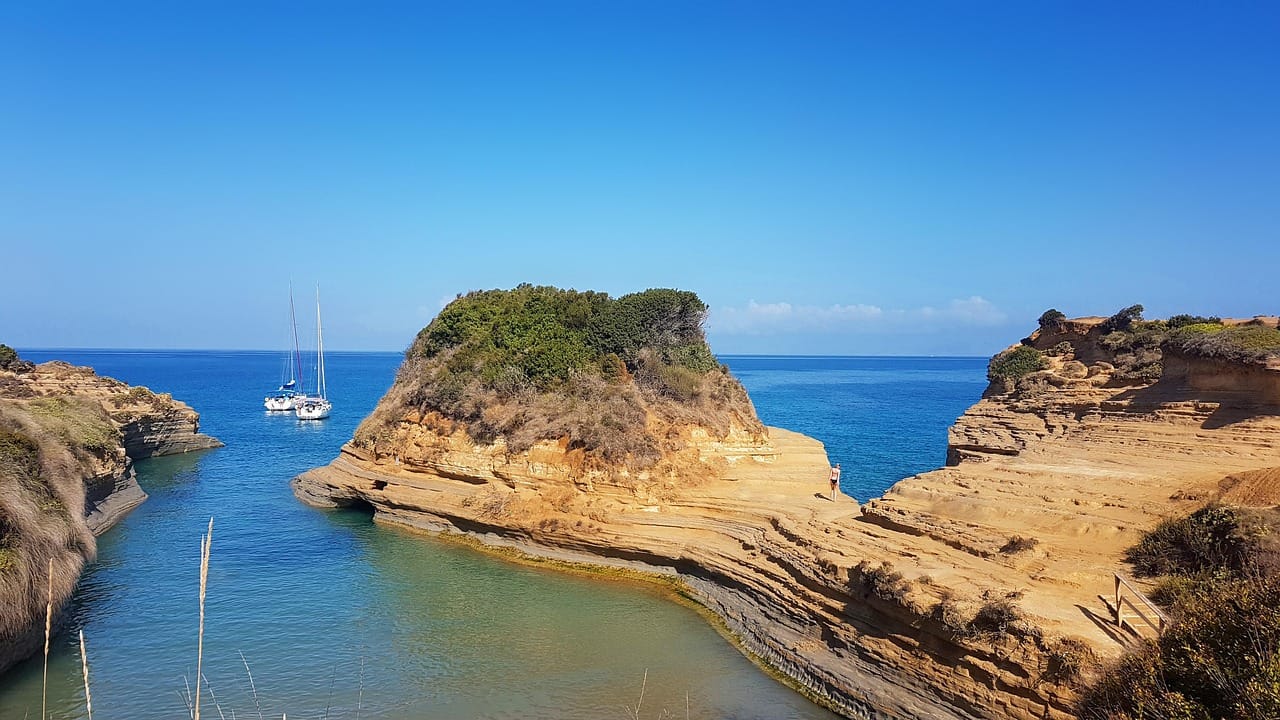
Several locations along Corfu’s northwest coast near Cape Drastis and Peroulades provide spectacular jumping with dramatic white cliff backgrounds creating extraordinary photo opportunities. The visual impact of these locations makes them favorites for groups wanting impressive documentation of their jumping adventures. The heights here can be substantial, with some formations offering 10-12 meter jumps for genuinely experienced cliff jumpers, though lower options exist for those wanting the spectacular setting without extreme heights. The open water exposure means these locations require careful weather assessment as northwest wind and swell can create conditions unsuitable for safe jumping despite the locations’ inherent advantages.
Island locations near Paxos and particularly around Antipaxos provide additional jumping opportunities often combined with visits to the famous beaches. The rocky coastlines feature numerous natural jumping platforms, and the extremely clear water around these islands provides excellent visibility for verifying safe landing zones. These island locations feel special partly because of the sense of adventure reaching them by yacht and partly because the setting, surrounded by turquoise water and away from mainland coasts, creates that feeling of discovering your own private adventure spot. Your captain knows which specific Paxos and Antipaxos locations work best for jumping versus simply swimming and snorkeling, ensuring your island visits include optimal activities for your group’s interests.
Proper Technique and Physical Preparation
Mastering proper entry technique before attempting significant heights dramatically improves both safety and enjoyment. The basic feet-first entry requires several elements working together: standing at the edge with feet together and toes pointing downward, body straight and vertical with shoulders back and chest open, arms positioned either crossed over chest with hands gripping opposite shoulders or held straight down along sides with hands covering groin area, eyes focused on the horizon rather than down at the water, and mental preparation and commitment to the jump. Practice this position on the yacht deck before attempting actual jumps, ensuring your body understands what proper form feels like. Your captain can observe and correct any issues with positioning before you’re standing at height where correction becomes impossible.
The launch itself requires decisive commitment rather than hesitant half-jumps that often result in poor form and uncomfortable entries. Step off with purpose, maintaining vertical body position throughout the fall, keeping legs together and straight with pointed toes, and arms controlled in their chosen position. The common mistake of drawing knees up toward chest during fall creates horizontal rotation making entry unpredictable and potentially painful. Trust your initial positioning and maintain it throughout the fall. The water feels like hitting a solid surface if you spread your legs or fail to maintain vertical alignment, teaching through discomfort why proper technique matters. Conversely, good technique makes even significant heights feel surprisingly manageable with impact that, while substantial, remains within comfortable tolerance.
Underwater technique matters as much as the jump itself. The impact drives you underwater sometimes surprisingly deep depending on jump height and entry quality. Don’t panic at the depth or darkness. Your buoyancy will arrest downward motion and begin bringing you back up, but you can assist by starting upward swimming motion once you feel momentum stop. Orient yourself quickly and swim toward light and surface. The disorientation sometimes accompanying deep submersion, particularly on first jumps, causes some jumpers to swim sideways or even downward briefly before correcting orientation. Staying calm and trusting your buoyancy prevents this panic response that wastes oxygen and energy.
Physical conditioning helps though cliff jumping doesn’t require athletic excellence. Adequate swimming ability obviously comes first as you must be completely comfortable in deep open water and able to swim back to the yacht after jumping. Basic leg strength helps maintain proper form during fall as keeping legs together and pointed requires some muscular effort that weak legs might struggle to maintain. Core strength assists in maintaining vertical body alignment during fall. However, recreational cliff jumping at moderate heights is accessible to reasonably fit people without special training or athletic backgrounds. The physical requirements increase with height as longer falls require maintaining form longer and create greater impact forces on entry requiring more robust physical condition to absorb comfortably.
Progressive Approaches to Building Confidence
The best approach to cliff jumping involves starting far lower than you think necessary and progressing gradually as comfort and confidence develop. Even if you’re comfortable with heights and feel confident about jumping, start with 2-3 meter jumps to verify your technique works and the experience matches your expectations. These starter jumps provide low-consequence opportunities to practice proper form, experience the sensation, and build confidence for higher attempts. Many first-time jumpers discover that even modest heights feel more intense than anticipated, making lower starts wise regardless of initial confidence. Conversely, successful low jumps build momentum and confidence making progression to higher jumps natural and exciting rather than terrifying.
Between jumps, take time to process the experience, discuss what went well or could improve, and reset mentally before attempting the next height. Rushing from one jump immediately to the next without pause often leads to accumulated anxiety and poor decision-making. The pause allows adrenaline to dissipate, your mind to evaluate the previous jump objectively, and your confidence to solidify based on successful completion. This measured approach prevents the escalation pattern where competitive energy or peer pressure drives jumps beyond comfortable limits, reducing enjoyment and increasing injury risk. Cliff jumping should feel exciting and fun, not terrifying. If you’re genuinely scared rather than pleasantly nervous, you’re attempting too much too fast.
Watch others jump before attempting new heights yourself, observing their technique, the time in freefall, and the splash intensity. This observation helps calibrate expectations and identify proper form in action rather than trying to remember abstract descriptions while standing at the edge. However, avoid the common trap of assuming that because someone else survived a jump it’s automatically safe for you. Different body weights, athletic abilities, and technique quality mean the same jump affects different people differently. Use others’ jumps as information inputs rather than proof of safety, and maintain your own assessment about whether specific heights feel appropriate for you.
Group dynamics around cliff jumping require careful management to prevent peer pressure overwhelming individual comfort levels. The best groups celebrate each person’s chosen participation level rather than pressuring everyone to match the highest jumps. Someone choosing to jump from 3 meters while others go higher shows wisdom and self-awareness deserving respect, not mockery or pressure. Similarly, choosing not to jump at all represents perfectly valid participation in the activity through watching, encouraging, and enjoying others’ experiences. The presence of professional captains helps manage these dynamics as they can authoritatively validate conservative choices, preventing the peer pressure dynamics that sometimes emerge in groups where everyone lacks experience and defers to the most aggressive personalities rather than most informed judgment.
How 99knots Captains Ensure Safe Experiences
The 99knots approach to cliff jumping begins with captain assessment and approval before any jumping occurs. Captains personally know the safe jumping locations through years of experience, understanding each spot’s characteristics, requirements, and potential hazards. When arriving at potential jumping locations, they verify current conditions meet safety standards considering water depth, clarity, currents, wind, waves, and any changes since their last visit. This verification often involves the captain swimming the area personally, checking depths with references to bottom features, and ensuring no new obstacles have appeared. Only after this assessment confirms safe conditions does the captain approve jumping and provide group instruction.
The instruction captains provide covers proper technique, highlights specific hazards at that location, establishes clear rules about where to jump from and where not to, and ensures everyone understands emergency procedures if someone needs assistance. This briefing takes just a few minutes but dramatically improves safety by ensuring everyone shares common understanding of proper procedures and expectations. The captain demonstrates proper form, points out the clear landing zone, shows where to enter water after climbing to jump positions, and establishes signals for communication between water and yacht. This professional instruction replaces the guessing and assumptions that lead to injuries at informal jumping locations.
During jumping activities, captains maintain active monitoring from the yacht or from positions in water near jumping areas. They watch each jump, verifying proper technique and immediately spotting any issues requiring correction before subsequent attempts. They ensure jumpers surface successfully after each entry, verifying no injuries or problems occurred. They manage group flow so jumpers don’t create hazards for each other by jumping too close together or swimming in landing zones while others prepare to jump. This active supervision prevents the chaos and compounding mistakes that emerge when groups attempt adventurous activities without experienced guidance.
Critically, 99knots captains maintain authority to stop jumping if conditions deteriorate or if they observe concerning behavior. If wind increases creating dangerous conditions, jumping ceases regardless of group desire to continue. If someone demonstrates poor technique or judgment despite instruction, the captain can prevent that individual from attempting heights beyond their demonstrated capability. If anyone shows signs of pressure or discomfort, the captain reinforces that participation remains optional and validates conservative choices. This authoritative oversight prevents the accidents that occur when groups lacking professional guidance make poor collective decisions driven by enthusiasm overwhelming judgment.
The captain’s role extends to helping individuals assess their personal readiness for different heights. Rather than making blanket pronouncements about what everyone should attempt, good captains evaluate each person’s comfort, swimming ability, technique demonstration, and expressed desires to provide personalized recommendations. This individual assessment helps people make informed decisions about appropriate challenges, preventing both the timid from missing experiences they’d actually enjoy and the overconfident from attempting heights beyond their capability. This personalized guidance transforms cliff jumping from generic group activity into tailored adventures where each person finds their optimal challenge level.
Documentation represents another service 99knots captains often provide, photographing and filming jumps from advantageous positions capturing both the jump action and jumpers’ expressions. These visual memories become treasured documentation of courage and adventure, shared enthusiastically on social media and revisited years later with pride and nostalgia. The captain’s positioning and timing creates far better documentation than handheld efforts from other participants could achieve, adding value beyond simple safety oversight to creating lasting memories of your adventurous yacht experiences.
Your cliff jumping adventure with 99knots in Corfu combines genuine thrills with professional safety management creating experiences that deliver adrenaline and memorable moments without unacceptable risk. The verified safe locations, proper instruction, progressive approach allowing confidence building, and active captain supervision ensure your jumping experiences become highlights of your cruise rather than regretted incidents. The crystal Ionian waters await beneath the rocky cliffs, and your moment of courage and freefall approaches under the watchful guidance of experienced professionals who’ve made this adventure safe for countless others before you.
Contact 99knots to plan your adventurous Corfu yacht cruise and discover why cliff jumping represents one of those activities everyone remembers and talks about long after vacation memories fade. The rocks wait, the deep water beckons, and your jump into thrilling adventure is just one well-guided leap away.