Choosing between a sailboat vs motor yacht vs catamaran is one of the most important decisions you’ll make as a prospective yacht owner or charterer. Each vessel type offers distinct advantages, from the serene, wind-powered elegance of a sailboat to the speed and luxury of a motor yacht, and the stability and space of a catamaran. Your ideal choice depends on factors like your sailing experience, budget, intended cruising grounds, and lifestyle preferences.
Whether you dream of harnessing the wind for extended ocean passages, enjoying the comfort and power of a motor-driven vessel, or maximizing onboard space with a twin-hull design, understanding the key differences is essential. This comprehensive guide breaks down the sailboat vs motor yacht vs catamaran comparison across critical aspects including performance, cost, maintenance, living space, and operational requirements. By examining each yacht type’s strengths and limitations, you’ll gain the clarity needed to make an informed decision that aligns with your maritime aspirations and practical needs.
Understanding the three main yacht types
Choosing the right yacht begins with understanding the fundamental differences between sailboats, motor yachts, and catamarans. Each type offers distinct advantages in terms of performance, comfort, and cruising experience.
Sailboats are monohull vessels powered primarily by wind through a system of sails and rigging. They appeal to purists who value the traditional art of sailing and the quiet, eco-friendly nature of wind propulsion. Most sailboats also feature auxiliary engines for maneuvering in harbors and navigating when wind conditions are unfavorable.
Motor yachts rely exclusively on engine power, offering speed, predictability, and luxurious amenities. These monohull vessels typically provide more interior volume than similarly sized sailboats, making them popular for entertaining and extended cruising. They excel at covering long distances quickly and maintaining schedules regardless of weather conditions.
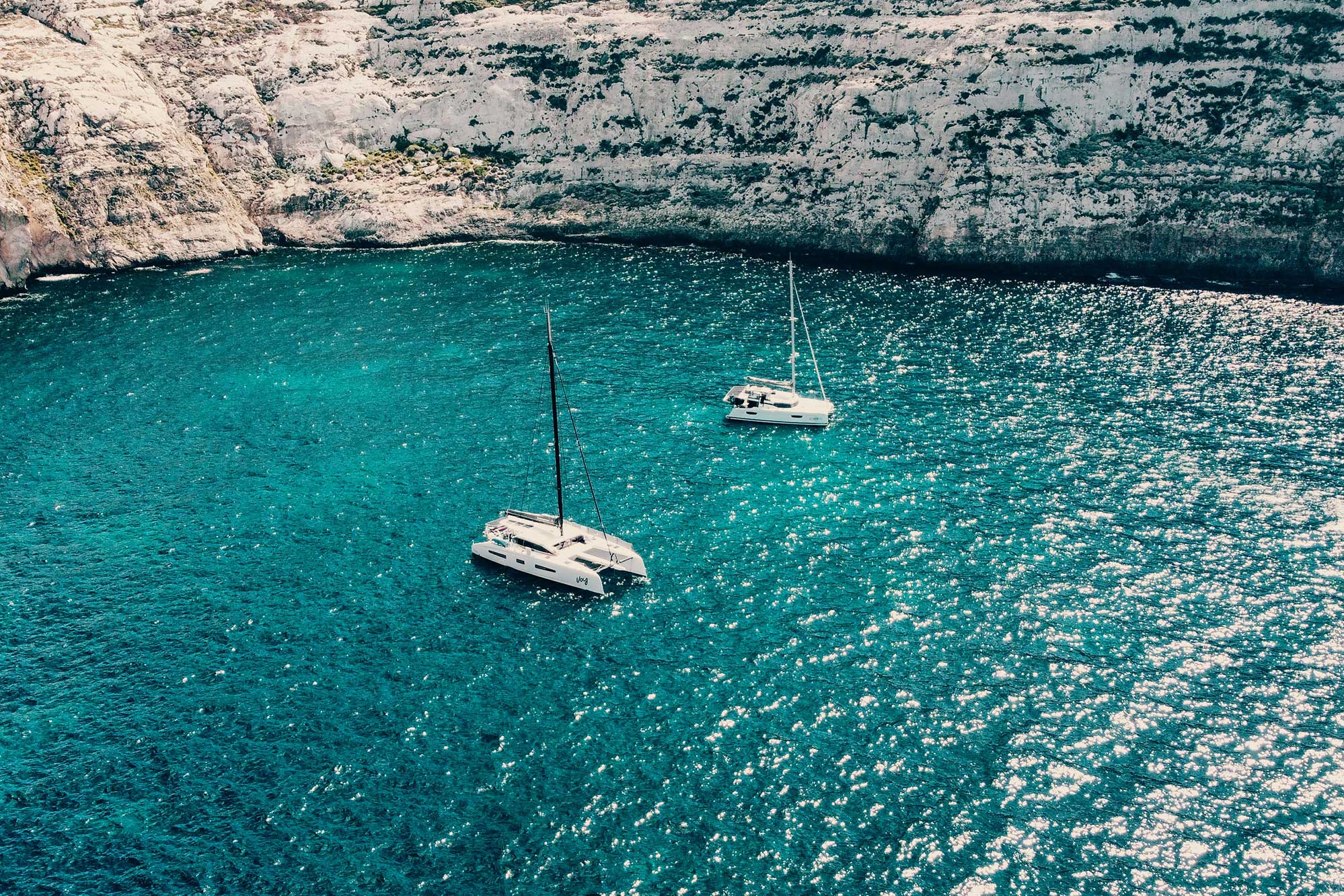
Catamarans feature two parallel hulls connected by a bridge deck, creating exceptional stability and spaciousness. Available in both sailing and power configurations, catamarans offer shallow drafts that allow access to secluded anchorages and beaches. The wide beam provides significantly more living space than monohulls of comparable length, with minimal heeling when under sail.
Understanding these fundamental characteristics helps narrow your search based on how you plan to use your yacht, where you intend to cruise, and what onboard experience matters most to you.
Performance and handling characteristics
Each vessel type offers distinct performance traits that directly affect your cruising experience. Sailboats rely on wind power, delivering a quiet, eco-friendly journey that connects you with natural elements. However, they require sailing knowledge and perform best in consistent wind conditions. Speed varies considerably based on wind strength, typically ranging from 5 to 12 knots for cruising sailboats.
Motor yachts provide predictable performance with speeds often exceeding 20 knots, depending on engine configuration. You gain precise control over departure times and routes, unaffected by weather conditions. The trade-off includes higher fuel consumption and engine noise, though modern designs have significantly reduced vibration levels.
Catamarans excel in stability due to their twin-hull design, which minimizes rolling motion and creates a more comfortable platform at anchor. This stability makes them ideal for those prone to seasickness. Their shallow draft allows access to secluded anchorages unavailable to deeper-keeled vessels. Catamarans, whether powered by sail or engines, typically offer better fuel efficiency than comparable monohulls.
Handling characteristics vary significantly between types. Sailboats demand active crew participation and respond gradually to helm inputs. Motor yachts offer responsive steering but require docking skills in tight marinas. Catamarans need wider turning circles and careful maneuvering in crosswinds, though their dual engines provide excellent control in close quarters.
Space, comfort, and onboard lifestyle
When comparing yachts, the interior space and comfort levels vary significantly between vessel types. Motor yachts typically offer the most spacious interior layouts, with multiple decks, expansive salons, and generous staterooms. The absence of sails and rigging equipment allows for unobstructed deck space and panoramic views through large windows. These vessels excel at providing resort-style amenities, from full-beam master suites to dedicated entertainment areas.
Catamarans present a compelling alternative for those prioritizing livable space. Their dual-hull design creates remarkably wide beam measurements, resulting in stable, apartment-style accommodations. The layout naturally separates living areas, providing privacy for guests in opposite hulls. Shallow drafts allow for closer anchorage to beaches and coves, while spacious flybridge and forward trampoline areas offer excellent outdoor entertaining spaces.
Sailboats generally provide more intimate quarters due to hull shape constraints and sailing equipment requirements. However, modern sailing yachts have evolved considerably, with clever design maximizing available space. The heeling motion during sailing may affect onboard comfort for some guests, though many find this authentic sailing experience appealing.
Your ideal choice depends on intended use. Motor yachts suit those wanting floating luxury homes. Catamarans appeal to families and groups valuing stability and social spaces. Sailboats attract purists who accept spatial compromises for the rewarding experience of harnessing wind power.
Operating costs and maintenance requirements
Operating costs vary significantly between yacht types, with sailboats typically offering the most economical option for long-term cruising. Fuel expenses remain minimal since wind provides the primary propulsion, though you will still need to budget for generator operation and auxiliary engine use when entering marinas or navigating calm waters.
Motor yachts represent the highest operational expense category. Fuel consumption can reach several hundred gallons per day depending on size and cruising speed, with larger vessels burning through thousands of dollars in fuel weekly. Engine maintenance requires regular servicing, oil changes, and eventual rebuilds or replacements, adding substantial costs over time. Expect to budget approximately 10 percent of the yacht’s purchase price annually for operating expenses.
Catamarans fall between sailboats and motor yachts in terms of operating costs. Their dual engines increase fuel consumption compared to monohull sailboats, but the efficient hull design reduces drag and improves fuel economy versus similar-sized motor yachts. Maintenance requirements include caring for two engines and more complex systems, though the stable platform makes routine upkeep easier to perform.
All yacht types require regular bottom cleaning, antifouling paint, insurance, slip fees, and routine system maintenance. Sailboats demand additional expenses for sail replacement, rigging inspection, and specialized hardware, while motor yachts need more frequent mechanical servicing and higher insurance premiums due to their greater replacement values.
Ideal use cases and cruising destinations
Sailboats excel in long-range ocean passages and destinations with consistent trade winds, making them ideal for crossing the Atlantic or exploring the Mediterranean during summer months. Their fuel efficiency allows extended cruising without frequent stops, perfect for remote island chains in the Caribbean or South Pacific. Sailors seeking authentic maritime experiences often choose sailboats for their connection to wind and weather patterns.
Motor yachts dominate in regions where distances between ports are shorter and luxury amenities take priority. The French Riviera, Greek islands, and Bahamas serve as prime motor yacht territories, offering protected waters and abundant marinas. These vessels suit charterers who prioritize comfort over sailing tradition, particularly when time is limited and you want to cover substantial distances quickly. Motor yachts also perform better in areas with unpredictable winds or tight cruising schedules.
Catamarans provide the ultimate platform for family cruising and shallow-water exploration. Their stability and spaciousness make them popular in the British Virgin Islands, Seychelles, and Croatia, where calm anchorages and protected bays are abundant. The shallow draft allows access to secluded beaches and remote coves that monohulls cannot reach. Catamarans work exceptionally well for groups prioritizing social space and comfort, particularly in tropical destinations where outdoor living areas enhance the charter experience.
Key factors to consider before making your decision
Before committing to a yacht purchase or charter, several critical factors will help determine which vessel type aligns with your needs and lifestyle. Understanding these considerations ensures you make an informed decision that you will not regret.
Budget and operating costs
Your financial capacity extends beyond the initial purchase price. Motor yachts typically demand higher fuel costs and more frequent maintenance, while sailboats require specialized rigging and sail care. Catamarans often command premium prices but offer lower mooring fees in some marinas due to their stability and draft advantages.
Intended use and cruising style
Consider how you plan to use your yacht. If you prioritize speed and covering long distances quickly, a motor yacht excels. For leisurely voyages with an emphasis on the journey itself, sailboats provide an authentic maritime experience. Catamarans suit those seeking comfort and stability, particularly families or groups desiring spacious accommodations.
Experience level and crew requirements
Your sailing expertise plays a vital role in this decision. Motor yachts are generally easier for beginners to operate, while sailboats demand more technical knowledge and physical involvement. Catamarans offer a middle ground with manageable handling characteristics, though their width requires careful maneuvering in tight spaces.
Destination and water conditions
The regions you intend to explore influence your choice significantly. Shallow draft catamarans access secluded anchorages, while deep-keeled sailboats perform better in rough offshore conditions.
- Ionian Islands Yacht Charter, Complete Guide to Greece’s Best Sailing
- Sunset Photography from Your Yacht: Tips and Best Locations in Corfu
- Corfu Yacht Charter Cost: Complete Pricing Guide for 2026
- Bareboat vs Crewed Charter: Which Is Right for Your Corfu Sailing Holiday?
- Lefkada Yacht Charter: Beaches, Routes & Planning Guide