Chartering a yacht through the Greek islands offers more than just crystal-clear waters and ancient ruins. It provides an unparalleled opportunity to experience authentic Greek cuisine in its most natural setting. Greek food on charter transforms your sailing adventure into a culinary journey, where fresh Mediterranean flavors meet the convenience of waterborne exploration. From sun-ripened tomatoes and creamy feta to succulent grilled octopus and flaky spanakopita, the tastes of Greece are as diverse as its island chains.
Whether you’re anchored in a secluded bay on Santorini, moored at a bustling harbor in Mykonos, or exploring the quieter shores of the Ionian Sea, access to exceptional Greek food on charter is remarkably simple. Local tavernas dot nearly every coastline, fishermen sell their daily catch directly from their boats, and island markets overflow with regional specialties. Understanding what dishes to seek out and where to find the most authentic experiences will elevate your charter from a simple vacation to an unforgettable gastronomic adventure through one of the world’s most celebrated culinary traditions.
Essential Greek dishes every charter guest should try
Greek cuisine offers an extraordinary blend of fresh ingredients, bold flavors, and centuries-old traditions that make every meal memorable. Charter guests exploring the Mediterranean should prioritize these iconic dishes to experience authentic Hellenic gastronomy.
Moussaka stands as Greece’s most celebrated comfort food, featuring layers of eggplant, spiced meat sauce, and creamy béchamel baked to golden perfection. This hearty casserole showcases the country’s mastery of combining simple ingredients into complex, satisfying flavors.
No Greek culinary journey is complete without souvlaki, skewered and grilled meat served with warm pita bread, tzatziki, and fresh vegetables. Whether choosing pork, chicken, or lamb, this street food favorite delivers authentic taste in every bite.
Fresh seafood takes center stage along coastal regions, with grilled octopus representing a quintessential choice. Tender, charred, and dressed with olive oil and lemon, this dish exemplifies the Greek philosophy of enhancing natural flavors rather than masking them.
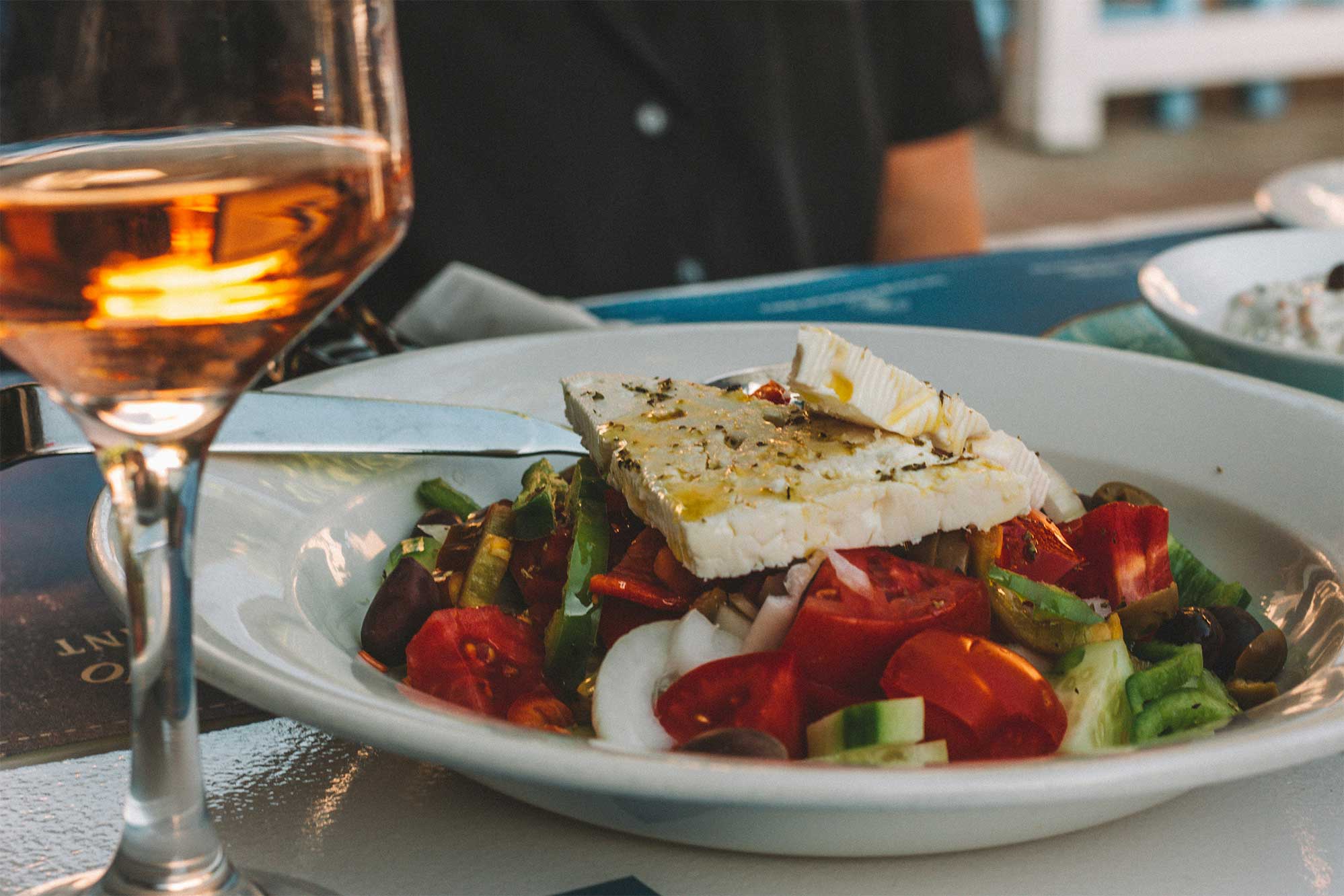
Spanakopita, a flaky phyllo pastry filled with spinach and feta cheese, offers a vegetarian option bursting with Mediterranean character. Greek salad, or horiatiki, provides refreshing simplicity with ripe tomatoes, cucumbers, olives, onions, and creamy feta dressed in olive oil and oregano.
For dessert, baklava delivers layers of crispy phyllo, chopped nuts, and honey syrup, creating an indulgent finale to any Greek feast.
Fresh seafood and catch of the day specialties
The Greek islands offer some of the Mediterranean’s finest seafood, with fishing boats returning daily to harbor with their fresh catches. Chartering along the coast provides unparalleled access to tavernas where the day’s haul goes straight from boat to kitchen, often within hours of being caught.
Octopus holds pride of place in Greek seafood cuisine, traditionally tenderized by repeated striking against rocks before being grilled over charcoal and dressed simply with lemon and olive oil. Red mullet, or barbounia, is another prized catch, typically fried whole and served with ladolemono sauce. Sea bream and sea bass are often salt-baked or grilled, allowing their delicate flavors to shine through minimal preparation.
In traditional psarotavernas, or fish taverns, you will often select your seafood directly from a display case or ice bed. Pricing is usually by weight, so clarify the cost before ordering. Squid and cuttlefish appear frequently on menus, either grilled or stuffed with rice, herbs, and aromatics.
For the freshest catches, moor at smaller fishing villages rather than major tourist ports. Islands like Sifnos, Paros, and the eastern Cyclades maintain strong fishing traditions. Visit tavernas near the harbor in the late afternoon when boats return, and ask for psari tis imeras, the fish of the day.
Traditional tavernas in the Cyclades islands
The Cyclades islands offer an abundance of authentic tavernas where you can experience Greek cuisine at its finest. Each island maintains its own culinary traditions while staying true to the archipelago’s signature flavors of fresh seafood, local cheeses, and sun-ripened vegetables.
On Mykonos, seek out tavernas in the fishing village of Ornos or the quieter neighborhoods behind Mykonos Town, where family-run establishments serve grilled octopus and kakavia, a traditional fisherman’s soup. Avoid the heavily touristed waterfront venues, where prices soar and quality often diminishes.
Paros boasts exceptional tavernas in Naoussa’s old port, where morning catches are transformed into mezze platters and whole grilled fish by evening. The island is particularly renowned for its revithada, a hearty chickpea stew baked overnight in wood-fired ovens.
Santorini’s traditional tavernas cluster in the villages of Pyrgos and Megalochori, away from the caldera crowds. Here you can sample fava, a creamy yellow split pea puree that is the island’s most celebrated dish, alongside tomatokeftedes, fried tomato fritters bursting with local cherry tomato flavor.
Naxos offers perhaps the most authentic taverna experience, with establishments in Halki and Apiranthos serving slow-cooked stews, arseniko cheese, and potatoes grown in the island’s fertile interior valleys.
Authentic dining spots in the Ionian islands
The Ionian islands offer some of Greece’s most memorable dining experiences, where family-run tavernas serve recipes passed down through generations. In Corfu, head to the village of Kinopiastes to find traditional establishments like Taverna Tripa, where locals gather for sofrito and pastitsada. The taverna’s stone walls and vine-covered courtyard provide an authentic setting for sampling these Corfiot specialties.
On Kefalonia, the fishing village of Fiskardo delivers exceptional seafood in a picturesque harbor setting. Visit Tassia Restaurant, where the catch of the day is prepared with locally pressed olive oil and wild herbs from the surrounding hillsides. The octopus stifado here exemplifies how simple ingredients transform into extraordinary dishes when prepared with care and expertise.
Zakynthos offers authentic dining away from the resort areas in mountain villages like Kiliomenos. At small tavernas such as Arekia, you can enjoy myzithra cheese, homemade bread, and slow-cooked lamb while overlooking olive groves that stretch to the sea. These establishments rarely advertise online, relying instead on word of mouth and repeat visitors who return year after year.
In Lefkada, the town of Karya combines stunning mountain views with exceptional local cuisine. The tavernas here specialize in lentil soup, wild greens, and handmade embroidery displayed alongside family photographs, creating an intimate connection to island traditions.
Local markets and provisioning for onboard meals
Provisioning your charter yacht with authentic Greek ingredients transforms onboard dining into a culinary adventure. Local markets across the Greek islands offer fresh produce, regional cheeses, and specialty items that capture the essence of Mediterranean cuisine.
The most rewarding shopping experiences happen at traditional laiki agores, or street markets, which operate on specific days in each town. Athens hosts several excellent options, including the Varvakios Agora near Monastiraki, where you can source fresh fish, cured meats, and bulk olives. On the islands, seek out morning markets in main towns like Mykonos, Paros, and Rhodes, where local farmers sell seasonal vegetables, honey, and handmade cheeses.
For convenient one-stop provisioning, Greek supermarket chains like AB Vassilopoulos, Sklavenitis, and Masoutis stock quality staples alongside international products. These stores typically feature dedicated sections for Greek olive oils, feta varieties, and regional wines. Smaller bakeries, or fournos, provide fresh bread and traditional pastries daily.
Plan your provisioning around your itinerary, as smaller islands may have limited options. Stock up on shelf-stable essentials like extra virgin olive oil, dried oregano, and canned tomatoes in larger ports. Purchase perishables like seafood and produce at regular intervals to ensure maximum freshness. Many marinas can arrange advance provisioning services if you provide a detailed list before arrival.
Greek wine and regional beverages to pair with your meals
Greece’s wine heritage spans millennia, with distinctive varietals that reflect the country’s diverse microclimates and island terroirs. The Aegean islands produce exceptional whites, particularly from the Assyrtiko grape grown in Santorini’s volcanic soil. These crisp, minerally wines pair beautifully with seafood meze and grilled octopus. For red wine enthusiasts, seek out Xinomavro from northern Greece or Agiorgitiko from the Peloponnese, both offering complex flavors that complement roasted lamb and moussaka.
Beyond wine, regional beverages add authentic character to your charter dining experience. Ouzo, Greece’s iconic anise-flavored spirit, transforms into a cloudy white when mixed with water and serves as the perfect aperitif. Raki, particularly prevalent in Crete, offers a similar experience with subtle variations in flavor profile. For after-dinner drinks, consider Metaxa, a Greek brandy that blends wine distillates with aged muscat wines.
Local craft breweries have emerged throughout the islands, producing distinctive beers using Mediterranean ingredients like honey and wild herbs. Charter guests will find these in tavernas on islands such as Corfu and Rhodes. Greek mountain tea, harvested from high-altitude regions, provides a caffeine-free alternative that locals swear aids digestion after heavy meals. Your charter crew can often arrange visits to family-owned wineries and distilleries for tastings during island stops.
- Ithaca Yacht Charter, Following Odysseus Through the Ionian
- Mourtos and Parga: Mainland Greece’s Coastal Gems by Yacht
- Sivota Greece, The Secret Fjords of the Ionian Sea
- Kefalonia Sailing Guide: Fiskardo, Caves & Hidden Bays
- Corfu Northeast Coast: Hidden Bays and Traditional Villages
- Corfu Sailing Itineraries: 7-Day Routes Through the Ionian Islands