Table of Contents
The Achilleion Palace area on Corfu’s eastern coast south of Corfu Town combines imperial grandeur with beautiful coastal landscape, featuring the magnificent palace that Austrian Empress Elisabeth (Sisi) built as personal refuge, stunning gardens with dramatic statuary and panoramic views, beautiful beaches and anchorages along the coast below the palace, the village of Gastouri maintaining authentic character despite proximity to major tourist attraction, and the overall combination of cultural significance with natural beauty that creates destinations worth visiting for both historical interest and maritime pleasure. The palace represents one of Corfu’s most significant cultural attractions, drawing substantial tourism to view the architecture, art collection, and gardens while learning about the tragic empress whose obsession with Classical Greece and Achilles mythology inspired this extraordinary creation. The yacht approach reveals the palace from sea perspective showing its commanding clifftop position, while the nearby beaches and anchorages provide swimming and relaxation opportunities that can be combined with cultural palace visit creating balanced day experiencing both Corfu’s human heritage and natural coastal beauty. Understanding the palace history and significance, planning the logistics of combining yacht-based coastal exploration with shore-based cultural visits, identifying the best beaches and anchorages in the immediate area, and appreciating how this region fits into broader Corfu yacht charter allows experiences that capture both the imperial romance and the practical pleasures that make the Achilleion area worthy of allocation in your cruising itinerary.
The Palace and Empress Sisi’s Story
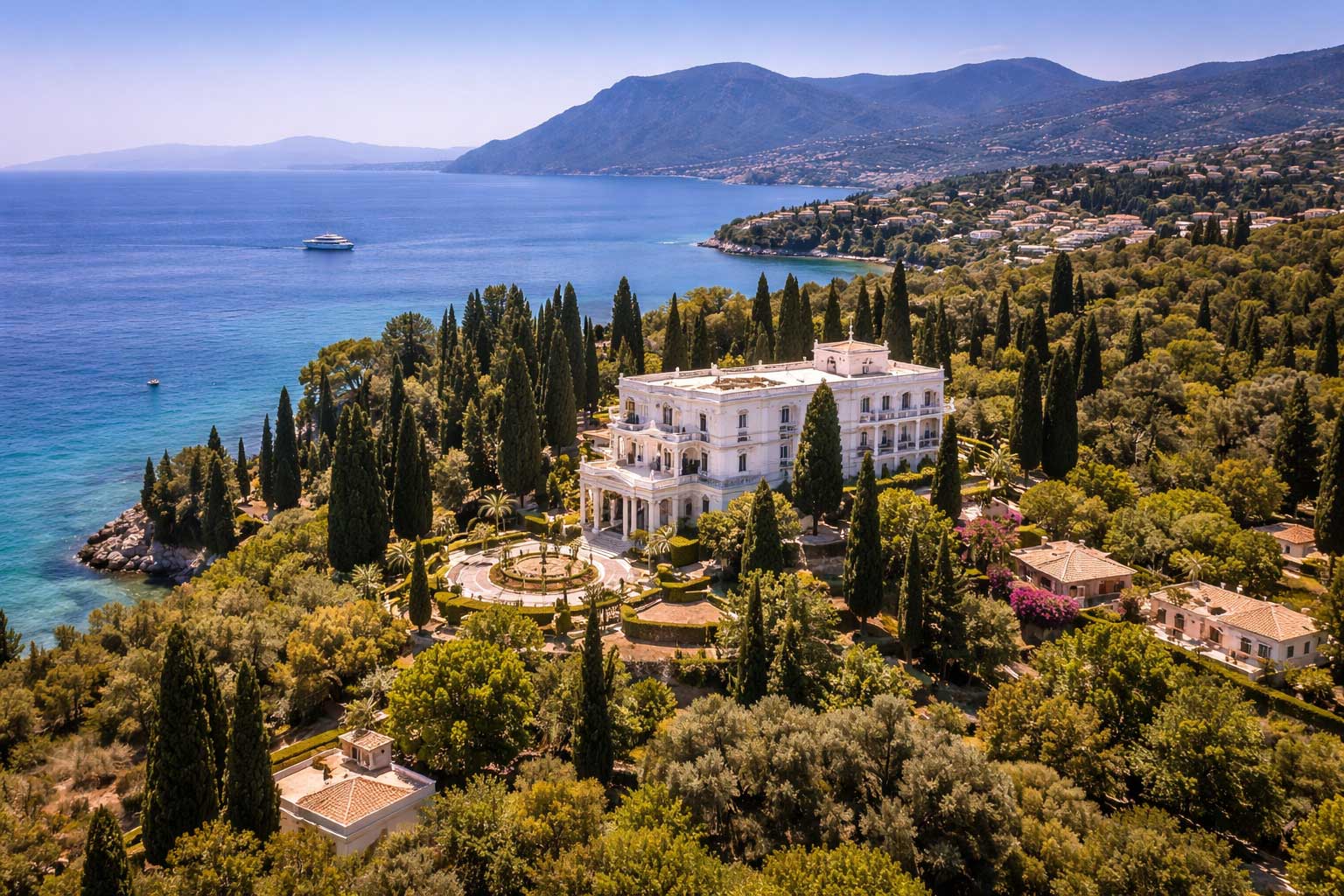
The Achilleion Palace construction began in 1890 commissioned by Empress Elisabeth of Austria, known universally as Sisi, who sought refuge from the oppressive formality of the Habsburg court and the personal tragedies that had devastated her life including her son’s suicide at Mayerling. The palace design reflects her obsession with Classical Greece and particularly the hero Achilles, whose qualities of beauty, strength, and tragic fate Sisi identified with deeply, creating monument to her romantic idealization of ancient Greek culture.
The architectural style combines neoclassical Greek revival with Italian Renaissance influences, featuring colonnaded terraces overlooking the sea, elegant proportions, beautiful materials including marble extensively throughout, and the overall grandeur appropriate for empress’s private palace while maintaining the intimate scale that distinguished personal retreat from official imperial residences. The setting on hillside descending toward coast provides the commanding views and the connection to sea that Mediterranean palaces traditionally emphasized.
The gardens surrounding palace contain the famous statuary that makes Achilleion distinctive, with the monumental dying Achilles sculpture dominating the main terrace, the triumphant Achilles added later by Kaiser Wilhelm II after purchasing the palace following Sisi’s assassination, numerous other classical sculptures and mythological figures throughout gardens, and the overall emphasis on heroic Greek antiquity that Sisi’s romantic vision celebrated.
The empress’s tragic assassination in 1898 by Italian anarchist while walking Geneva’s lakefront ended her ownership after just eight years, with the palace subsequently purchased by Kaiser Wilhelm II who used it as winter residence until World War I when it became Greek state property. The multiple imperial owners and the contrasting characters of sensitive artistic Sisi versus militaristic autocratic Kaiser created the layered history that palace guides explain during tours.
The interior contains the art collection, personal items, historical exhibits documenting both Sisi’s life and the palace history, period furnishings recreating imperial atmosphere, and the overall museum experience providing context beyond simple architectural appreciation. The collection emphasizes 19th-century paintings, classical mythology themes, and the personal effects that humanize historical figures beyond their imperial titles.
Palace Visit Logistics from Yacht Base
The shore excursion from yacht moored at Corfu Town, Benitses, or other nearby marinas provides the practical approach for palace visits, with the 10-15 kilometer distance requiring taxi, rental car, or organized tour rather than walking or attempting yacht landing at the rocky coast below palace. The transportation options vary in cost, convenience, and flexibility, with choice depending on group size, budget, and desired control over timing and itinerary.
The taxi services provide direct efficient transport from marina to palace entrance, with waiting arrangements possible allowing you to control visit duration without depending on scheduled tour timing. The cost proves reasonable when split among groups, though the round-trip fare plus potential waiting time adds up particularly if combining palace with other destinations requiring multiple stops.
The rental car allows independent exploration combining palace with nearby beaches, villages, and the overall flexibility that organized tours cannot match. The freedom to linger at locations exceeding expectations or quickly move past disappointing sites creates superior experience for those comfortable with Greek driving and navigation, though the coordination and parking challenges at popular sites create complications that some prefer avoiding.
The organized tours from Corfu Town include palace visit combined with other attractions, providing comprehensive guided experience with historical context, transportation logistics handled professionally, and the overall simplicity that many travelers prefer despite higher per-person costs and inflexible schedules forcing you to match tour timing rather than your preferences.
The opening hours vary seasonally with extended summer hours accommodating tourist demand while winter sees reduced schedule, requiring verification before planning excursion to avoid arriving during closure. The admission fees prove modest by European palace standards, with the cultural value and spectacular gardens justifying the cost for those interested in history and architecture beyond simple beach vacation.
The time allocation typically requires 2-3 hours for thorough palace and garden exploration including the museum exhibits, though brief visits focusing on highlights and photography can complete in one hour if time constraints limit extended touring. The combination with beach time at nearby anchorages allows balanced day experiencing both cultural and natural attractions rather than dedicating entire charter day to palace visit.
Beaches and Anchorages Below the Palace
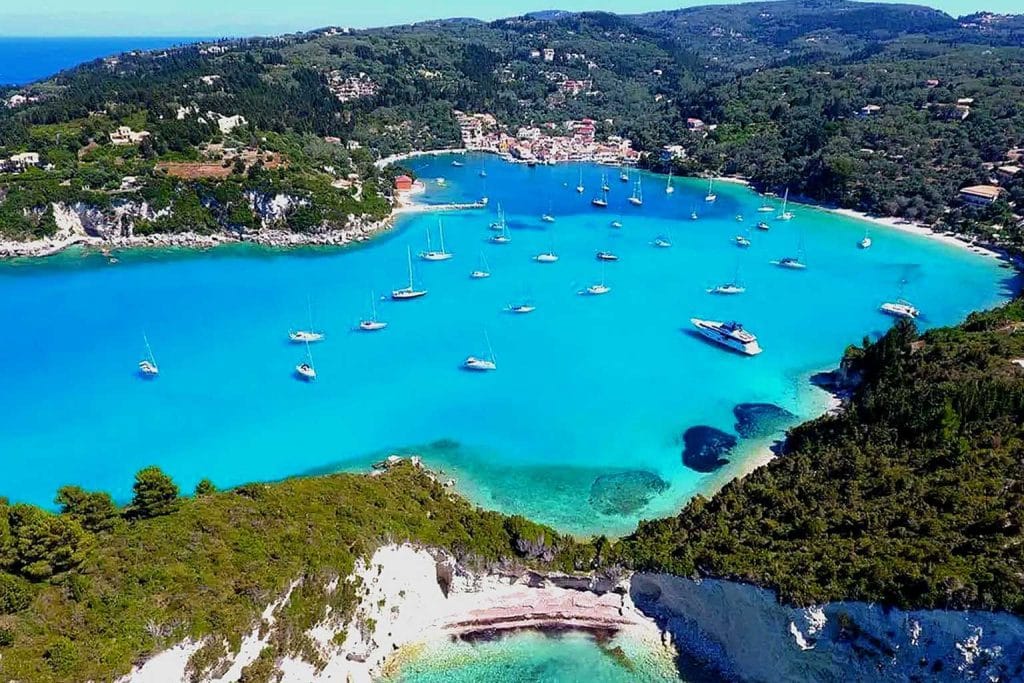
The coastline directly below Achilleion features several beaches and potential anchorages providing swimming opportunities that can be combined with palace visits creating integrated experience. The beaches prove less famous than northern Corfu destinations but offer quality swimming, reasonable facilities, and the convenient location allowing shore access for palace excursions.
Benitses Bay (not to be confused with Benitses village further north) sits directly below palace headland, featuring pebble beach, clear water, seasonal facilities including tavernas and beach services, and the overall character of local beach serving Greek visitors and knowing tourists rather than package tour masses. The anchorage provides adequate holding, reasonable protection from northwest winds, easy shore access, and the practical combination of swimming destination with palace launching point.
The beach facilities include sunbed rentals, tavernas serving traditional Greek food, some water sports equipment, and the overall modest infrastructure that enhances without dominating natural appeal. The view up toward palace visible on clifftop provides unique perspective showing the commanding position and scale impossible to appreciate from palace grounds looking down.
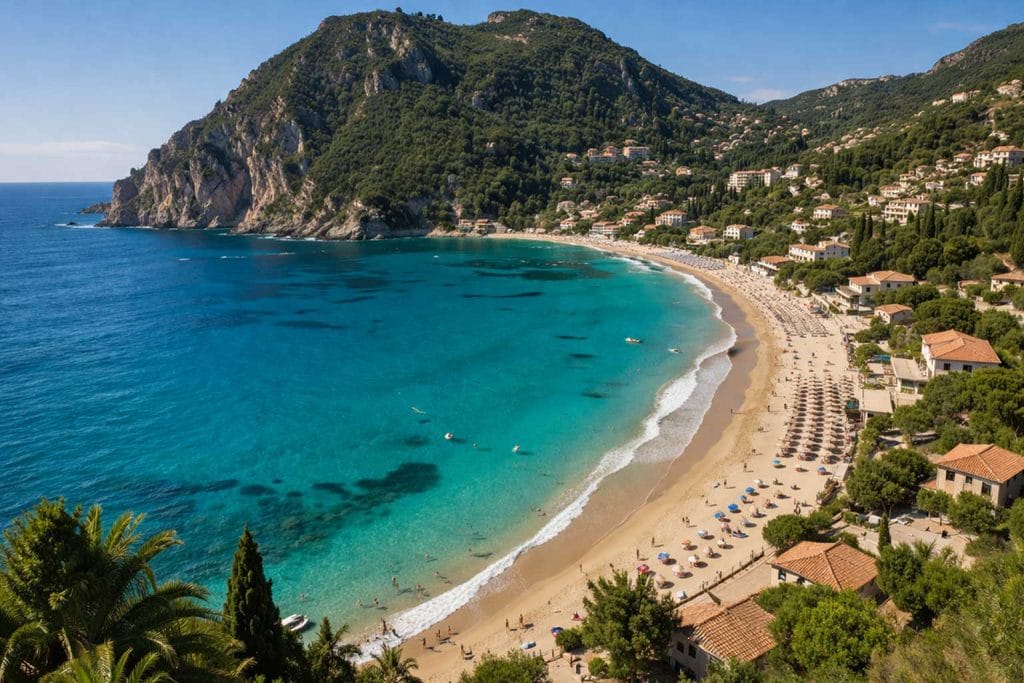
Perama Beach south of Achilleion offers longer beach with mix of sand and pebbles, clearer water than Benitses due to position away from development, modest facilities, and the character of authentic Greek beach maintaining local flavor. The village behind beach provides additional tavernas, provisioning options, and the cultural dimension beyond simple swimming destination.
The anchorage works well in appropriate conditions though exposure to southeast winds requires weather assessment before committing to extended stays. The bottom composition allows good holding when anchor sets properly, while the depth provides adequate water for comfortable positioning without requiring excessive scope in deep water.
Agios Ioannis Peristeron further south features small church on tiny islet connected by causeway, beautiful beach, crystal-clear water, and the overall scenic appeal that church-on-island settings naturally create. The beach proves quieter than more accessible northern destinations, rewarding those willing to explore beyond obvious highlighted locations.
Gastouri Village and Local Character
Gastouri village inland from the coast and directly below Achilleion maintains traditional Greek character despite palace proximity and the tourist traffic that such major attraction generates. The village provides glimpse of authentic Corfu life continuing traditional patterns despite the changes that tourism and development brought to coastal areas.
The village square serves as social center with kafeneions where local men gather for coffee and conversation, small shops selling everyday goods rather than tourist souvenirs, bakeries producing excellent bread for residents, and the overall infrastructure supporting actual community rather than existing purely for visitor entertainment. The observation of traditional Greek village life provides cultural dimension that palace tour alone cannot deliver.
The tavernas in Gastouri serve primarily Greek clientele rather than tourists, ensuring authentic cuisine and the traditional preparations that tourist-oriented establishments sometimes abandon for internationally acceptable but less interesting menus. The dining in Gastouri creates genuine Greek meal experience complementing the imperial grandeur that palace represents, showing contemporary Greek life beyond historical monuments.
The church in village center maintains active religious role with services, feast day celebrations, and the ongoing spiritual life that distinguishes living communities from tourist constructions. The Orthodox traditions continue shaping village rhythm despite the secular tourism economy supplementing traditional agriculture and local commerce.
The architecture preserves traditional Venetian-influenced Corfu style with characteristic buildings, narrow streets, small squares, and the overall organic development that creates authentic village character impossible to replicate through planned construction regardless of architectural skill or investment.
Combining Palace and Beach Day
The optimal strategy combines cultural palace visit with coastal relaxation, creating balanced day that exercises both mind and body while experiencing Corfu’s diverse attractions. The typical approach involves morning palace visit before heat intensifies and when mind remains fresh for cultural absorption, followed by afternoon beach time allowing swimming, relaxation, and recovery from the palace touring.
The morning palace schedule might involve shore excursion departure from yacht around 9:00 AM, arrival at palace by 9:30-10:00, thorough gardens and interior exploration until 12:00-1:00 PM, and return to beach below palace or nearby anchorage for lunch and swimming. This timing captures palace during optimal conditions while allowing substantial afternoon beach time before evening return to yacht.
The lunch options include bringing provisions from yacht for beach picnic, dining at tavernas near your chosen beach combining swimming with traditional Greek meal, or returning to yacht for lunch before afternoon swimming and relaxation. The choice depends on preferences balancing convenience, cost, authentic dining experience, and the overall flow creating most satisfying day.
The beach selection depends on factors including yacht anchoring position, desired facilities and character, crowd tolerance, and the specific activities planned. The more developed beaches provide amenities and services at cost of authenticity and crowds, while quieter alternatives deliver peace and natural character requiring greater self-sufficiency and acceptance of limited facilities.
The integration creates superior experience compared to dedicating full day exclusively to palace touring or exclusively to beach activities, with the variety maintaining interest and energy while the combination captures Corfu’s multifaceted appeal beyond single-dimensional focus on either culture or nature exclusively.
Photography and Visual Perspectives
The Achilleion area provides exceptional photography opportunities combining architectural grandeur, classical statuary, beautiful gardens, coastal landscapes, and the overall visual richness that makes it among Corfu’s most photogenic locations. The photography timing, perspectives, and approach significantly affect results, with understanding of optimal conditions separating compelling documentation from average snapshots.
The palace photography benefits from morning or late afternoon light providing dimensional shadows and avoiding the harsh midday sun that flattens architectural details. The golden hour light enhances the warm tones of marble and stonework while the lower sun angle creates the dramatic shadows that emphasize sculptural forms and architectural elements.
The gardens provide endless compositional opportunities with the statuary, terraces, plantings, sea views, and the overall designed landscape that professional landscape architects created specifically for visual impact. The famous dying Achilles sculpture demands photographic attention, though the numerous other statues and garden features reward comprehensive exploration rather than focusing exclusively on the single most famous element.
The sea perspective from yacht reveals palace commanding position impossible to appreciate from palace grounds, with the view from water showing the relationship between palace, coast, and surrounding landscape that creates context for understanding the site’s strategic and aesthetic position. The yacht inclusion in photographs provides scale and documents your specific experience rather than generic architectural documentation.
The interior photography follows museum standards limiting flash photography to protect artworks, restricting commercial photography requiring special permits, and the overall guidelines preserving collections while allowing reasonable personal documentation. The respect for these rules demonstrates appreciation for cultural heritage beyond simple tourist consumption.
Historical Context and Cultural Significance
The Achilleion represents more than simply beautiful palace, embodying the romantic 19th-century nostalgia for Classical Greece, the personal tragedy of Empress Elisabeth whose beauty and sadness captured public imagination, the contrasts between Austrian imperial formality and Greek freedom that attracted Northern Europeans, and the overall cultural currents that made Greece powerful symbol for artists and aristocrats seeking escape from industrializing modern Europe.
The Philhellenism movement celebrating ancient Greek achievement and supporting modern Greek independence from Ottoman rule found expression in buildings like Achilleion, where wealthy Northern Europeans demonstrated their cultural allegiance and their romantic identification with classical civilization they considered foundational to European identity despite the vast historical and cultural gaps separating 19th-century Austria from ancient Athens.
The empress’s personal story resonates beyond historical interest through the universal themes of beauty and tragedy, freedom and constraint, artistic sensitivity versus political duty, and the overall human drama that transcends her imperial status to create empathy across centuries and social positions. The palace preserves her memory while allowing visitors to understand the woman behind the imperial title.
The Kaiser Wilhelm’s subsequent ownership adds layer showing contrasting imperial personality and the political currents that made this beautiful retreat eventually witness to the nationalism and militarism that would destroy the European order both empires represented. The palace survived these historical transformations to become Greek cultural property serving educational and tourist purposes quite different from either emperor’s intentions.
The contemporary significance involves preserving architectural and historical heritage, providing cultural tourism supporting local economy, educating visitors about European history and Greek cultural influence, and the overall role that historic sites play connecting present to past while generating revenue sustaining preservation efforts.
Practical Visitor Information
The admission fees remain modest at approximately 10-15 euros per adult with reductions for students, seniors, and children, making palace visit affordable cultural experience accessible to various budgets. The fees support ongoing maintenance and the museum operations that keep palace functioning as active cultural site rather than abandoned monument.
The guided tours provide historical context and architectural explanation that independent visits cannot match, with knowledgeable guides sharing stories about Sisi, the palace construction, the artwork, and the countless details that bring the location alive beyond simple observation. The tour participation proves worthwhile for those interested in comprehensive understanding rather than brief photo opportunity.
The accessibility considerations involve steep gardens with numerous steps making comprehensive touring challenging for those with mobility limitations, though the main palace level provides adequate wheelchair access and the primary viewpoints remain accessible without requiring the garden stairs. The understanding of physical requirements allows appropriate planning and realistic expectations.
The photography permissions allow personal non-commercial photography throughout palace and grounds with restrictions on flash in museum areas, tripod use potentially requiring permission, and commercial photography requiring advance permits and fees. The policies balance public access with preservation needs while protecting commercial interests of official palace photography operations.
The gift shop and refreshments provide the commercial amenities that modern cultural tourism expects, with books, souvenirs, local products, cafe refreshments, and the overall services enhancing visit while generating revenue supporting palace operations. The quality varies from tasteful items reflecting palace heritage to typical tourist merchandise, allowing choice matching different preferences and budgets.
The Achilleion Palace area represents Corfu’s premier cultural attraction combining imperial history with beautiful coastal setting, tragic romance with architectural grandeur, museum collections with stunning gardens, and the overall package that appeals to those seeking depth beyond simple beach vacation while the nearby coastal anchorages and beaches allow integrating cultural touring with the maritime focus that yacht charters emphasize. Understanding the palace history and Empress Sisi’s story, planning logistics combining shore-based palace visit with yacht-based coastal exploration, identifying optimal beaches and anchorages in the immediate area, and appreciating how cultural and natural attractions complement rather than compete creates balanced experiences that capture Corfu’s multifaceted appeal. The magnificent palace crowns its hillside overlooking the beautiful Ionian Sea, the gardens display their sculptural treasures celebrating classical Greek heroism, the nearby beaches offer clear water and relaxation balancing cultural touring, and the overall area delivers the combination of imperial romance and coastal pleasure that makes yacht charter Corfu about far more than simply collecting beautiful anchorages, creating instead comprehensive engagement with island culture, history, and the natural beauty that has attracted visitors from Empress Elisabeth through Kaiser Wilhelm to contemporary sailors seeking experiences transcending simple tourism to become genuine cultural and natural discovery.