Afionas and Porto Timoni
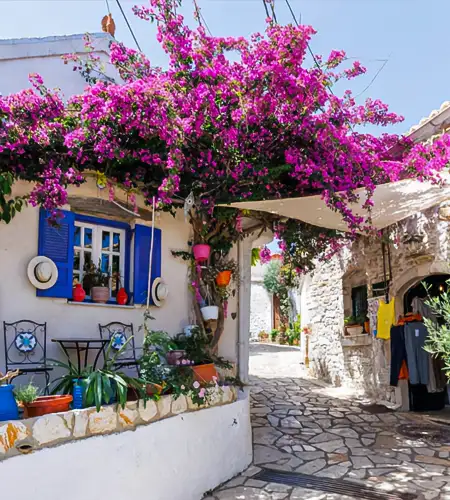
Afionas is one of the most picturesque and authentic villages on the island of Corfu, built in a strategic location on the island’s northwestern edge, perched on a hill that embraces the Ionian Sea. This charming settlement is known for its strong traditional character, with narrow stone-paved alleys known as kantounia, stone houses, flower-filled courtyards, and breathtaking panoramic views that leave visitors speechless.
The history of Afionas stretches back through the centuries. The village's inhabitants, descendants of farmers and seafarers, have preserved local customs and traditions, something that remains visible even today in the festivals, religious feasts, and the village's distinctive architecture. The church of Saint John the Baptist, located in the heart of the settlement, stands quietly overlooking the village, while scattered chapels and old stone structures bear witness to the area's long-standing habitation. However, what truly sets Afionas apart is not only its traditional charm but also its stunning location. From nearly every vantage point in the village, the view over the Ionian Sea is nothing short of spectacular. To the west, the vast Ionian merges with the Adriatic Sea, offering magical sunsets, while to the east, Corfu's lush mountains blend with the blue of the sky. It is here that one can feel the essence of Corfu authentic and unspoiled.
Corfu’s Timeless Village, Breathtaking Sunsets, Myth-Laden Trails, and Hidden Twin Beaches Framed by Nature, Tradition, and Ionian Tranquility
One of the most famous beaches of Corfu
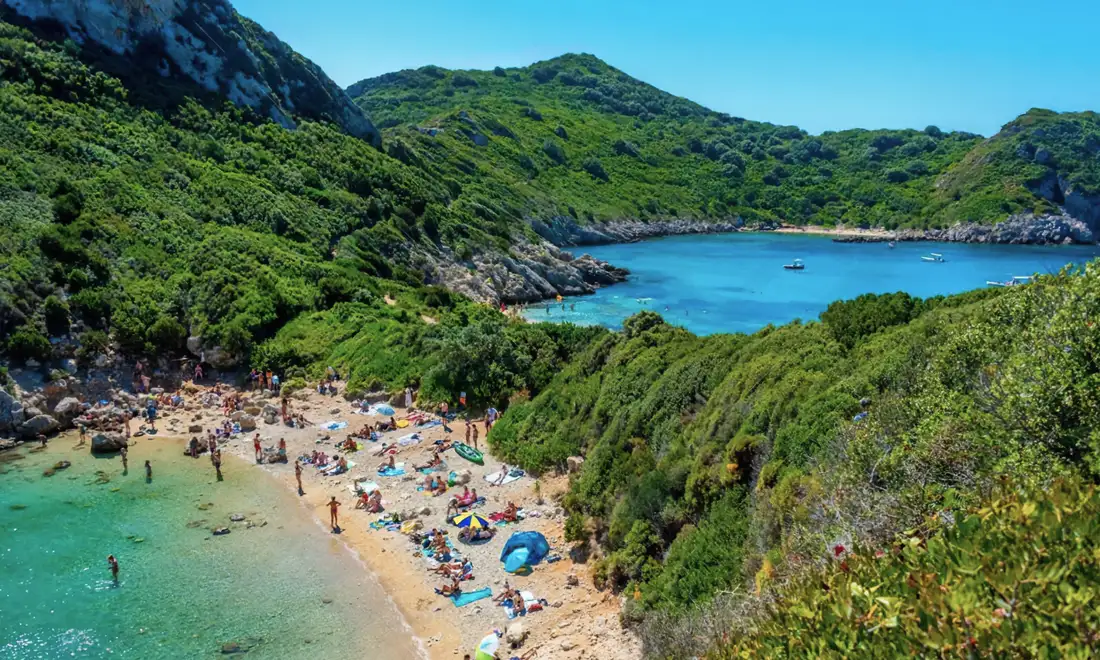
From Afionas begins a descending trail that leads to one of Greece’s most famous beaches: Porto Timoni. In reality, Porto Timoni consists of two adjacent coves, each with its own beach, connected by a narrow strip of land. This rare geological formation creates a striking natural double bay.
One beach faces the bay of Agios Georgios with calm, turquoise waters, while the other opens out to the open sea of the Ionian, where the waters are deeper, bluer, and more dramatic. Between them, the slender land strip acts as a natural bridge between two contrasting worlds, offering a truly enchanting and unique blend of landscapes. To reach Porto Timoni, one must hike for about 20 to 30 minutes along a moderately challenging footpath that begins in Afionas. The trail winds through low Mediterranean vegetation and rocky formations, revealing stunning views at every turn. Though the descent requires good footwear and some physical effort, the destination is more than worth it. Porto Timoni is not an organized beach there are no sunbeds, umbrellas, beach bars, or roads just pure nature, tranquil waters, and an overwhelming sense of escape from modern life. It’s the ideal setting for those seeking solitude, couples looking for romance, or nature enthusiasts and photographers eager to capture something extraordinary.
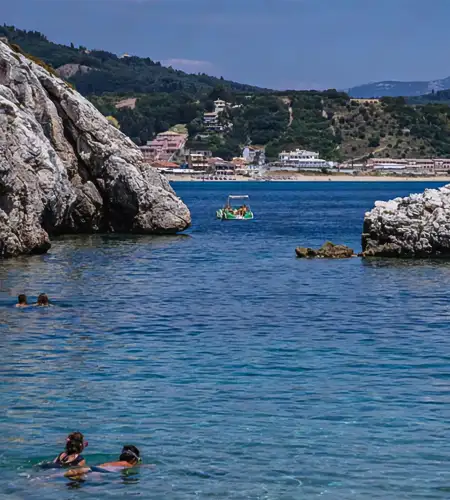
Notably, the area around Porto Timoni is rich in historical and spiritual significance. There are remnants of ancient settlements and small chapels, such as the tiny church of Saint Stylianos, tucked inside a cave. These elements lend a deeper cultural and mystical aura to the landscape. Some researchers even associate the region with the Phaeacians from Homer’s Odyssey, adding an air of myth and legend to the location.
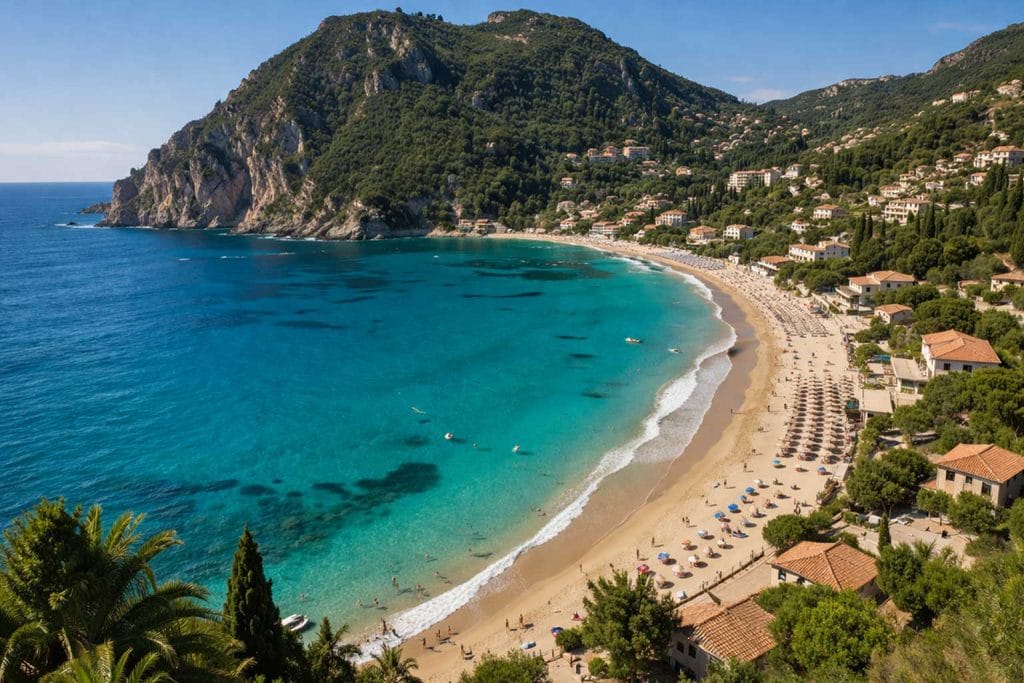
Just a short drive from Afionas, nestled in the heart of a wide bay, lies the coastal village of Agios Georgios Pagon home to one of the most beloved beaches on the island. The bay is framed by rolling hills and olive groves, and its sandy beach stretches for nearly five kilometers, offering golden sands and shallow, crystal-clear waters.
Agios Georgios is particularly popular with families and vacationers seeking peace and relaxation. The beach is fully organized, equipped with sun loungers, umbrellas, beach bars, water sports schools, and facilities for renting pedal boats or canoes. Visitors can spend their days soaking up the sun by the shore or exploring the small coves found at the edges of the beach. Over time, the village has developed into a quiet yet well-equipped tourist destination, with a variety of accommodation options, from small family-run guesthouses to luxurious private villas. Local cuisine dominates the menus of the area’s restaurants and tavernas, where guests can enjoy traditional Corfiot dishes such as sofrito, pastitsada, and burdeto recipes passed down through generations.