Table of Contents
- Geography and Character of the West Coast
- Paleokastritsa: The Crown Jewel
- Glyfada and Myrtiotissa: The Golden Beaches
- Agios Gordios and Ermones: The Central West
- Sunset Anchorages and Evening Magic
- Weather Dependencies and Timing
- Safety Considerations and Anchoring
- Combining West and East Coast Cruising
Corfu’s west coast presents dramatically different character from the sheltered eastern shores, featuring towering cliffs plunging into deep blue water, spectacular beaches with golden sand unusual for predominantly pebble-beached Corfu, exposure to open Ionian Sea creating both challenges and rewards, famous Paleokastritsa monastery and bay complex representing the island’s most celebrated natural beauty spot, and the overall wild dramatic landscape that contrasts sharply with the gentler developed eastern coastline. The western exposure means these destinations require careful weather assessment and appropriate conditions, as the prevailing northwest winds and potential swell can transform calm morning paradise into uncomfortable or dangerous afternoon conditions requiring retreat to eastern protection. The rewards for visiting when conditions permit include some of Corfu’s most spectacular scenery, excellent swimming in crystal-clear water, stunning sunset perspectives impossible from eastern anchorages, and the overall sense of experiencing Corfu’s wild natural beauty rather than the civilized tourist-friendly version that eastern development presents. Understanding the west coast’s geography, identifying optimal destinations and timing, managing the weather dependencies that determine accessibility, and appreciating both the spectacular rewards and real limitations allows yacht charters that capture this remarkable coastline’s magic while respecting the conditions that make western cruising more demanding than protected eastern waters.
Geography and Character of the West Coast
The west coast’s geological character derives from limestone formations creating dramatic vertical cliffs in many sections, with erosion over millennia carving caves, arches, isolated sea stacks, and the complex formations that make this coastline visually spectacular. The cliffs rise hundreds of meters from water’s edge in places, creating amphitheater settings for beaches tucked beneath towering walls and the overall sense of dramatic scale that gentler eastern shores cannot match.
The orientation facing directly into prevailing northwest winds means the coast experiences more swell, stronger afternoon breezes, and overall more dynamic conditions than eastern shores. This exposure creates both the spectacular wave action that carved the dramatic formations and the practical sailing considerations that make western destinations conditional rather than reliably accessible regardless of weather. The understanding that western visits depend fundamentally on favorable conditions prevents disappointment and allows alternative planning when weather doesn’t cooperate.
The development remains notably less intensive than eastern Corfu, with the challenging topography, limited road access to many beaches, and the overall difficulty of building on steep cliffsides preserving more natural character. The beaches that do feature development maintain more modest scale compared to eastern resort areas, creating the overall impression of wilder less-tamed coastline where nature dominates human presence rather than the reverse.
The beach composition shifts from Corfu’s typical pebbles to golden sand at several major western beaches, creating different character and the softer beach experience that many visitors prefer. This sand derives from different geological sources than the limestone that dominates eastern shores, creating the color and texture variations that give western beaches distinctive appeal beyond simply their dramatic settings.
Paleokastritsa: The Crown Jewel
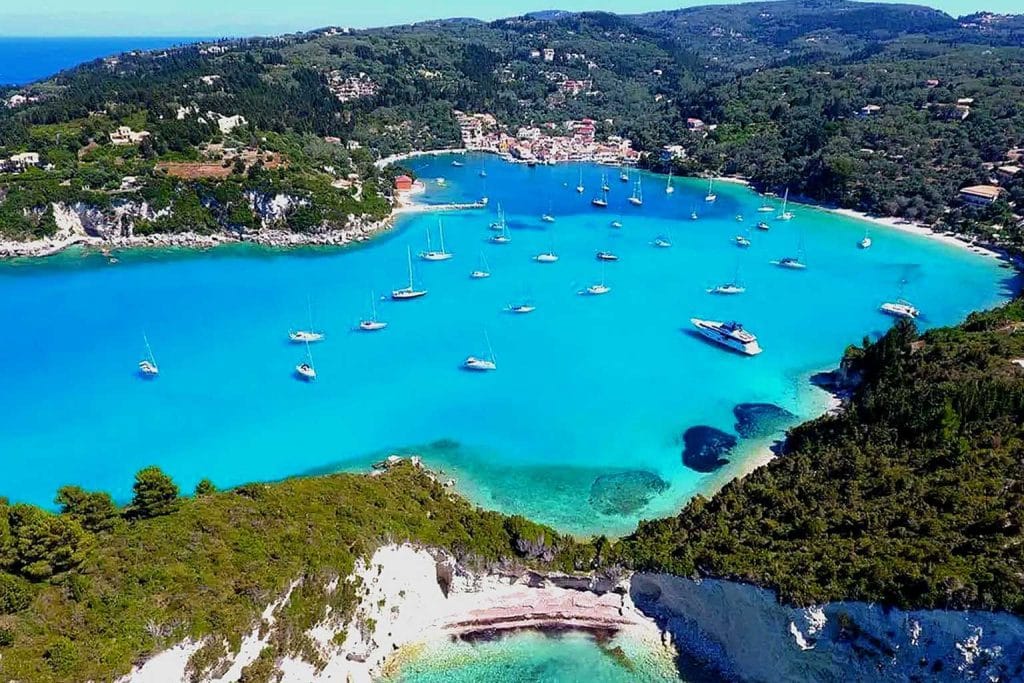
Paleokastritsa represents Corfu’s most famous beauty spot, featuring multiple interconnected bays with crystal-clear water, dramatic white cliffs, lush green hillsides covered with cypress and olive trees, the historic monastery perched on promontory overlooking the bays, and overall setting of such concentrated beauty that it attracts substantial tourism including yacht visitors, tour buses, and the inevitable crowds that such fame creates during peak season.
The bay complex includes several distinct coves each offering different character and anchorage conditions. The main Agios Spyridon bay provides the most protected anchorage with good holding, though summer crowds can make finding adequate space challenging and the constant boat traffic creates busy atmosphere quite different from peaceful remote anchorages. The smaller bays including Alipa and Agios Petros offer alternatives with different exposure and character, requiring assessment of current wind and swell to determine which provides optimal conditions.
The monastery visit represents essential Paleokastritsa experience, requiring dinghy landing at small beach and steep climb to the historic complex. The monastery dates to 13th century though current buildings reflect later reconstruction, featuring beautiful icons, peaceful courtyards, small museum documenting history, and spectacular viewpoints over the bays and surrounding coastline. The modest dress requirements (covered shoulders and knees) and respectful behavior expected at active religious sites should be observed, with appropriate clothing brought ashore for the visit.
The snorkeling and swimming around Paleokastritsa rank among Corfu’s finest, with the clear deep water, interesting rock formations creating habitat for marine life, and the overall spectacular underwater scenery that mirrors the above-water beauty. The numerous small caves allow swimming exploration, though caution regarding swell and the confined spaces proves essential for safety. The water clarity often exceeds 20 meters visibility, allowing observation of bottom formations and marine life with perfect detail.
The timing considerations favor early morning arrivals before the tour boat rush intensifies, with the period from 8:00-10:00 AM offering the best combination of calm conditions, good light, and manageable crowds. The afternoon typically brings strengthening northwest breezes creating less comfortable anchoring and swimming conditions, suggesting Paleokastritsa works better as morning destination before continuing to more protected eastern locations for afternoon and overnight.
Glyfada and Myrtiotissa: The Golden Beaches
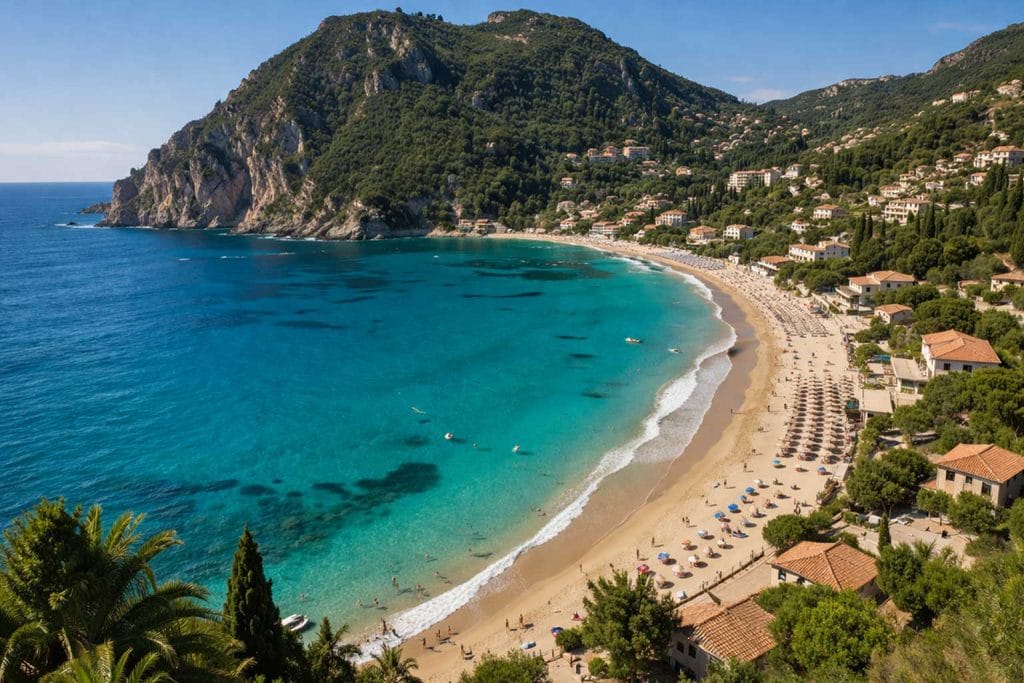
Glyfada Beach south of Paleokastritsa represents Corfu’s premier sandy beach, featuring beautiful golden sand, crystal-clear water, dramatic cliff backdrop, excellent beach facilities including restaurants and amenities, and the overall combination of natural beauty with convenient services. The beach attracts substantial numbers during peak season including both land-based visitors and yacht anchorages, creating vibrant social atmosphere some enjoy while others find overwhelming.
The anchorage requires careful assessment of swell and wind conditions, as the open western exposure means conditions can deteriorate quickly when weather shifts. The optimal positioning balances proximity to beach for easy access with adequate depth and protection from any swell. The holding in sand proves generally reliable when anchor sets properly, though the exposure means you cannot remain if conditions worsen regardless of how well anchor holds.
The beach facilities include numerous tavernas and beach bars providing lunch, refreshments, and the conveniences that developed beaches offer. The sunbed rentals, water sports equipment, and overall commercial infrastructure create resort atmosphere quite different from pristine wilderness beaches but appealing for those wanting amenities and services beyond simple natural beauty. The combination allows choice between anchoring off quiet beach sections or positioning near facilities depending on preferences.
Myrtiotissa Beach further south achieves legendary status among those familiar with Corfu, described by Lawrence Durrell as perhaps the most beautiful beach in the world. The designation proves subjective and perhaps exaggerated, but Myrtiotissa certainly delivers spectacular beauty combining golden sand, dramatic cliffs, clear water, and overall pristine character with minimal development beyond single modest taverna. The beach maintains clothing-optional tradition at certain sections, creating different atmosphere from family-oriented developed beaches.
The anchorage at Myrtiotissa proves more challenging than Glyfada due to deeper water close to shore, more exposure to swell, and overall conditions requiring careful assessment and favorable weather. The rewards include superior swimming, stunning scenery, and peaceful atmosphere that developed Glyfada cannot match despite its advantages. The choice between beaches depends on priorities balancing convenience against pristine beauty, facilities against solitude.
Agios Gordios and Ermones: The Central West
Agios Gordios Bay features long beautiful sandy beach backed by dramatic cliffs and green hillsides, well-developed tourist infrastructure including hotels and restaurants, water sports facilities, and the overall character of established beach resort. The bay provides better protection than more exposed western locations, creating more reliable anchorage though still requiring weather assessment before committing to extended stays.
The beach facilities cater primarily to land-based tourists staying at surrounding hotels, though yacht visitors can access the restaurants and amenities easily. The commercial atmosphere proves more pronounced than quieter beaches, with the advantages of comprehensive services and the disadvantages of crowds and the overall resort environment that some specifically avoid when seeking yacht charter experiences.
The surfing opportunities at Agios Gordios attract enthusiasts when conditions create rideable waves, typically during periods when stronger winds and swell affect the coast. The surf culture creates different beach atmosphere than typical swimming-focused Greek beaches, appealing to active sports-oriented visitors while potentially proving less suitable for those seeking purely peaceful relaxation.
Ermones Bay to the north offers beautiful green valley setting with beach, golf course, and overall lush landscape quite different from typical Mediterranean scenery. The setting inspired Disney’s Odyssey animated film, with the local marketing emphasizing this connection to Homeric mythology and Corfu’s identification as legendary Scheria where Odysseus encountered the Phaeacians. The anchorage requires favorable conditions given the exposure, but rewards with genuinely different character and the peaceful atmosphere that limited development preserves.
Sunset Anchorages and Evening Magic
The west coast’s orientation creates spectacular sunset opportunities impossible from eastern shores where sun sets behind Corfu’s mountains rather than over open sea. The strategic positioning at appropriate anchorages allows experiencing sunsets of remarkable beauty, with the sun descending directly into the Ionian Sea creating the classic Mediterranean evening scenes that define the romance of sailing in Greek waters.
The optimal sunset anchorage selection depends on specific conditions, desired atmosphere, and the balance between sunset perspectives and overnight protection. Some locations provide spectacular sunset viewing but require departure afterward to reach protected eastern anchorages for comfortable overnight stays, while others offer adequate though not perfect overnight protection allowing you to remain at western locations if conditions prove suitable.
The Paleokastritsa bays provide excellent sunset perspectives with the monastery and cliffs silhouetted against evening sky, creating dramatic compositions that photography enthusiasts particularly appreciate. The protection proves adequate for overnight in settled conditions, though readiness to depart for eastern shelter if weather deteriorates remains essential. The evening atmosphere with lights from monastery and surrounding hills reflecting on calm water creates magical ambiance that justifies the effort of western visits.
The timing involves arriving afternoon with adequate time for swimming and exploration before sunset, positioning yacht for optimal sunset viewing, and making real-time decision about whether to remain overnight or depart for eastern protection based on conditions assessment and forecast. The flexibility proves essential as conditions evolve and the decision cannot be made definitively in advance regardless of planning.
The photography opportunities during golden hour and sunset prove spectacular, with the dramatic landscapes, beautiful light, and overall visual feast creating images that capture Corfu’s natural beauty at its finest. The combination of yacht in foreground with sunset and cliffs creates compositions that standard landscape photography cannot achieve, documenting your charter in settings that define the romance of sailing Greek islands.
Weather Dependencies and Timing
The west coast visits require understanding that conditions determine accessibility more than desire or planning, with favorable weather essential for safe comfortable experiences while deteriorating conditions mandate immediate departure regardless of how much you might want to remain. The acceptance of this conditional nature prevents disappointment and allows alternative planning when western visits prove inadvisable.
The optimal conditions involve light to moderate northwest winds that remain parallel to coast rather than directly onshore, calm to slight swell, clear visibility allowing navigation near cliffs safely, and stable forecast showing no deterioration expected during your visit duration. The morning hours generally provide calmest conditions before afternoon sea breezes develop, suggesting early timing for western exploration.
The forecast interpretation requires experience and conservative judgment, with any uncertainty about conditions suggesting postponement rather than commitment to western exposure. The professional captain’s assessment based on observed conditions, forecast trends, and years of local experience proves far more reliable than charterer’s optimistic interpretation hoping conditions will prove suitable despite marginal indicators.
The backup planning proves essential, with alternatives identified for situations where western visits become impossible or inadvisable. The excellent eastern destinations ensure positive experiences regardless of whether western exposure proves accessible, preventing the sense of failure or missed opportunities when prudent decisions keep you in protected waters rather than forcing western visits under marginal conditions.
Safety Considerations and Anchoring
The western anchorages require more careful approach and anchoring technique than protected eastern bays, with the exposure, deeper water in some locations, swell potential, and overall dynamic conditions demanding professional expertise and appropriate precautions. The understanding that these locations prove more challenging helps appreciate why experienced captains sometimes decline western visits when conditions show any uncertainty.
The anchoring technique involves proper approach accounting for swell and wind, adequate scope for deeper water and potential conditions changes, careful backing down to ensure anchor sets properly, and continuous monitoring of holding and conditions rather than assuming initial set remains adequate as weather evolves. The bottom composition varies by location with sand, rock, and weed all possible, requiring understanding of what each means for holding reliability.
The swell assessment proves particularly critical, as even modest swell can create uncomfortable motion making swimming unpleasant, anchor dragging more likely, and overall conditions that seem manageable initially but become untenable as day progresses. The experience to distinguish acceptable swell from problematic conditions comes only through years of local sailing, making captain’s judgment essential rather than charterer preference.
The departure readiness involves maintaining awareness of conditions, having anchor easily retrievable, and psychological willingness to leave beautiful location when prudent assessment indicates staying no longer proves wise. The discipline to depart when conditions deteriorate rather than hoping they’ll improve distinguishes safe professional operations from amateur optimism that sometimes creates dangerous situations.
Combining West and East Coast Cruising
The optimal Corfu yacht charter typically combines western highlights when conditions permit with the reliable eastern cruising that provides consistent positive experiences regardless of weather. The balance allows capturing Corfu’s full diversity while maintaining realistic expectations about western access depending on conditions during your specific charter dates.
The routing might involve early charter day assessing western conditions and visiting Paleokastritsa if weather cooperates before continuing to northeast coast for afternoon and overnight, creating day that captures both major coastlines. The alternative involves dedicating full day to western exploration when forecast shows sustained favorable conditions, visiting multiple western beaches and anchorages before returning east for overnight protection.
The flexible approach that adjusts daily plans based on actual conditions rather than rigid predetermined routing proves superior, allowing optimization that responds to real-time assessment rather than forcing plans that conditions make inadvisable. The trust in your captain’s judgment about when western visits work versus when eastern alternatives prove wiser creates better overall experiences through appropriate decision-making.
The appreciation for both coastlines’ distinct characters allows valuing each for what it offers rather than viewing one as superior to the other. The west coast provides drama, spectacular scenery, and the wildness that exposure creates, while east coast delivers reliable access, authentic villages, and the sheltered conditions supporting comfortable extended cruising. The combination creates comprehensive Corfu understanding that single-coast focus cannot achieve.
Corfu’s west coast represents the island’s wild dramatic side, combining spectacular natural beauty with the challenges that western exposure inevitably creates, requiring favorable conditions for access while rewarding those who visit when weather permits with some of the Mediterranean’s most stunning coastal scenery. The famous Paleokastritsa, beautiful sandy beaches, dramatic cliffs, and spectacular sunsets justify the effort and weather dependency, creating experiences that remain vivid long after charter completion. Understanding the geography, respecting the conditions that determine accessibility, timing visits appropriately, and maintaining realistic expectations about western cruising’s conditional nature allows yacht charters that capture this remarkable coastline’s magic while managing the practical realities that make western sailing more demanding than protected eastern waters. The dramatic cliffs await your admiration when conditions permit access, the golden beaches promise spectacular swimming under favorable circumstances, the sunsets deliver romance that eastern shores cannot match, and the overall experience provides the wildness and natural beauty that make sailing adventures genuinely special for those willing to accept that nature determines the schedule rather than human desire dictating when and where you can safely venture along Corfu’s magnificent western shore.