Mon Repos: Royalty in Corfu
Mon Repos, one of the most iconic buildings in Corfu, is not merely a refined neoclassical palace. It is a space imbued with historical and symbolic significance, having served as a summer residence for both the British and Greek royal families. Moreover, it was a site where events of crucial importance unfolded, shaping the political and cultural history of Greece and the Ionian Islands.
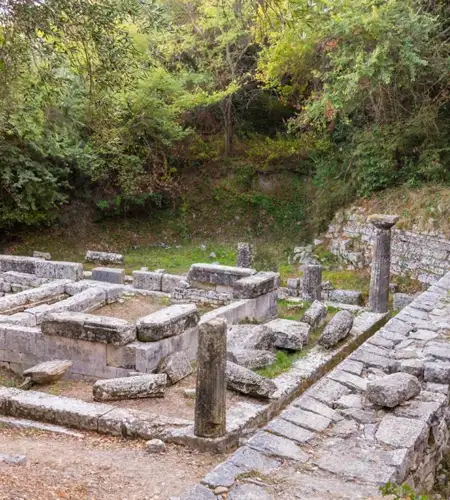
Mon Repos is located on the outskirts of Paleopolis, the ancient city of Corfu, near the Kanoni area. It is surrounded by lush gardens covering hundreds of acres. The location was chosen not only for its natural beauty but also for its historical importance. Within the estate’s grounds lie remnants of the ancient agora, a Roman aqueduct, and the sanctuary of Hera. This unique combination of archaeological wealth, natural serenity, and architectural elegance makes Mon Repos a one-of-a-kind place in Greece.
Neoclassical Elegance, Royal Birthplace, Political Landmark, and Cultural Treasure in Corfu’s Ancient Heart, Bridging British Rule, Greek Monarchy, and European Historical Legacy
The history of the Palace
The palace was constructed in 1828 by the British Lord High Commissioner of the Ionian Islands, Sir Frederick Adam. He desired a summer home for his family, especially for his Greek-born wife, Nina Palaiologou. The architectural design blended neoclassical elements with features inspired by British colonial architecture. The name “Mon Repos,” meaning “My Rest” in French, reflects the private character of the estate and its purpose: a peaceful retreat from public life in an idyllic setting.
During British rule in the Ionian Islands (1815–1864), Mon Repos was primarily used by British officials. It served both as a residence and as an administrative and social hub where receptions, ceremonies, and diplomatic meetings took place. The presence of Mon Repos was closely linked with the British aim of ensuring political stability in the region and projecting an image of cosmopolitan authority.
After the Union of the Ionian Islands with Greece in 1864, the palace came under the ownership of the Greek state. It was soon granted to the Greek royal family for use as a summer retreat during their visits to Corfu. From that time onward, Mon Repos became closely associated with the Greek monarchy. One of the most notable events connected to the estate was the birth of Prince Philip of Greece and Denmark, later the husband of Queen Elizabeth II of the United Kingdom, on June 10, 1921. Prince Philip was a member of the Greek Danish royal family, the son of Prince Andrew of Greece and Princess Alice of Battenberg. His birth brought Mon Repos into the international spotlight and established a lasting connection between Corfu and the British royal family.
Throughout the 20th century, up until the abolition of the monarchy in Greece, Mon Repos continued to be used intermittently by the royal family, particularly during the summer months. King Paul and Queen Frederica, as well as the future King Constantine II, spent time at the palace. Despite its royal associations, the estate retained a relatively private and discreet character, unlike the more public Athenian palaces. It offered a quiet refuge within Corfu’s cosmopolitan environment.
Following the fall of the monarchy and the proclamation of the Hellenic Republic in 1974, the issue of royal properties came to the forefront of public debate. The Greek state expropriated Mon Repos, along with other royal estates, declaring them state property. The former King Constantine II took the matter to the European Court of Human Rights, arguing that this action violated property rights. In 2002, the court ruled that Greece was not required to return the properties but was obligated to pay compensation, approximately 13 million euros, to Constantine and his family.
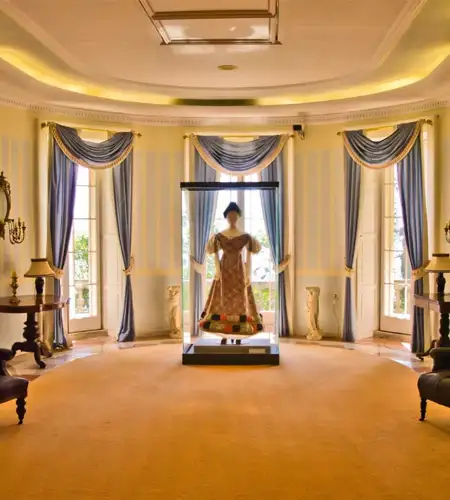
Today, Mon Repos belongs to the Greek state and operates as a public museum under the jurisdiction of the Corfu Ephorate of Antiquities. The palace itself has been renovated and now hosts exhibitions that explore the history of the building, archaeological discoveries from ancient Paleopolis, and cultural insights about the surrounding area. The extensive garden, rich in Mediterranean flora and featuring walking paths, is open to the public and offers a unique blend of natural and cultural enjoyment.
Mon Repos has become one of the most visited attractions in Corfu, drawing tourists from around the world not only for its architecture and historic relevance but also for its ties to European history and royal heritage. It stands as a testament to Corfu’s layered past, from ancient times to modern royalty, and continues to captivate visitors with its elegance and legacy.