The Corfiot Dialect
The Corfiot dialect is a unique linguistic phenomenon in the Greek-speaking world, as it blends elements of the Greek language with strong influences from Venetian, Italian, and other Western European languages. This linguistic variety is not merely a means of communication, it serves as a living carrier of the history, culture, and identity of the people of Corfu. Understanding the Corfiot dialect is, therefore, essential to interpreting the cultural journey of the island.
Due to its geographical position in northwestern Greece and its complex historical path, Corfu came under the influence of many different civilizations and linguistic traditions. From the 14th century until the end of the 18th, the island was under the rule of the Republic of Venice. During those four centuries, the constant interaction with Italian administration, Venetian aristocracy, their language, and their culture left a deep imprint on the everyday speech of the local population.
The History, Identity, and Cultural Significance of the Corfiot Dialect from Venetian Roots to Modern-Day Preservation and Revival Efforts
The Italian Influence
After the Venetians, Corfu fell under French rule (1797–1799 and 1807–1814), then under Russo-Turkish control (1799–1807), and finally British rule (1815–1864). Although none of these later occupations had the same duration or influence as the Venetian period, each left behind small traces in the local language. When Corfu was united with the modern Greek state in 1864, the local dialect was not erased but gradually altered, mainly due to the establishment of Standard Modern Greek in education and public life.
Historically, the Corfiot dialect also had a class dimension. The upper social classes, often of Italian descent or associated with the Venetian administration, tended to speak a “purer” form of Venetian, whereas the common people developed and used a mixed idiom. Over the centuries, these social-linguistic distinctions faded, and the dialect evolved into a more unified local form, which is still spoken today, primarily in informal, spoken contexts.
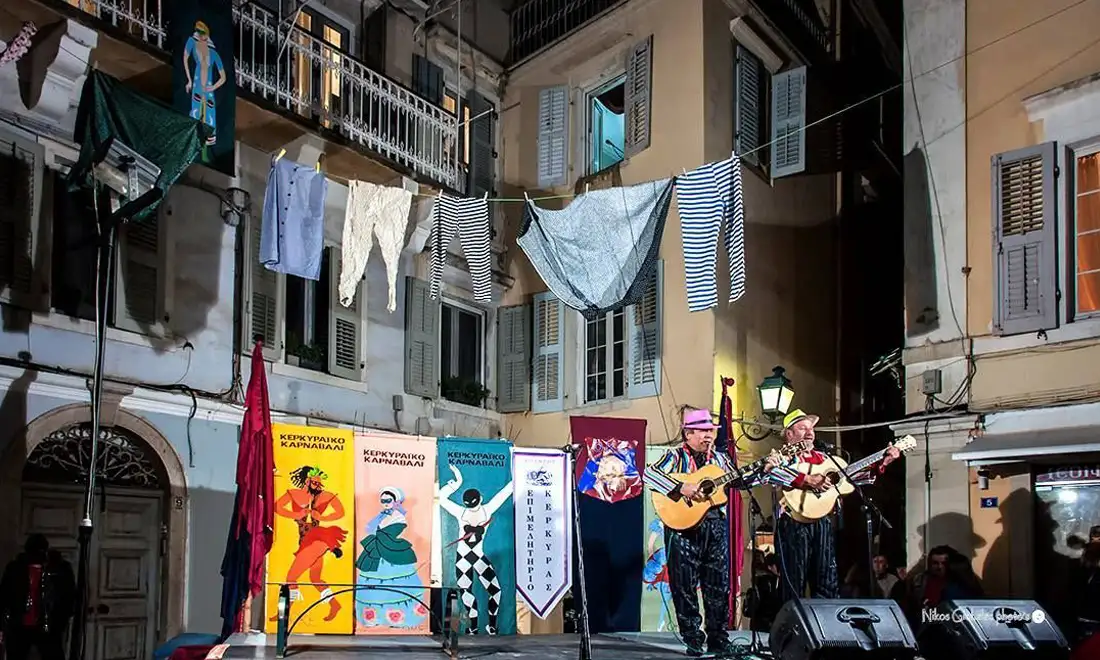
The dialect has also played, and continues to play, a major role in the theatrical and musical culture of Corfu. The so-called petegoletsa (satirical local plays) and the Ionian kantada (a type of choral serenade) make extensive use of the dialect, conveying local concerns, social values, and humor in a language that is intimate and alive to the local people.
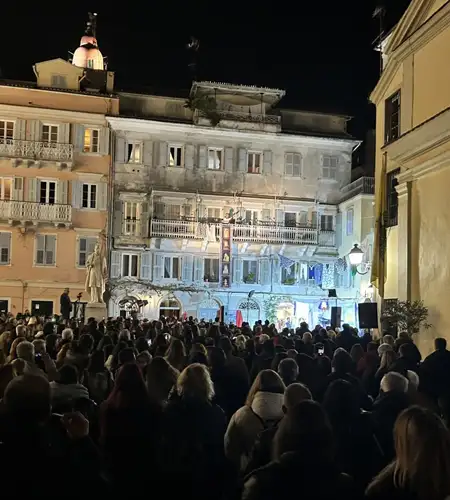
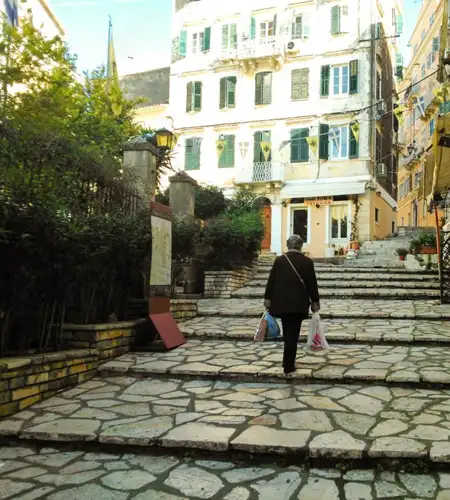
In modern times, the Corfiot dialect faces serious challenges. The spread of mass media, the dominance of Standard Greek in public life and education, and internal migration have all contributed to the reduction of dialect use, particularly in the larger urban centers of the island. Many younger Corfiots no longer speak the dialect fluently or only know fragments of it, mostly through their grandparents. However, in recent years, there has been a growing movement to document and preserve the dialect. Local cultural associations, philologists, and researchers have begun to collect words, proverbs, expressions, and oral histories in an effort to safeguard and showcase this linguistic heritage. At the same time, several theatrical groups have incorporated the dialect into their performances, and educational materials now reference it as an essential component of local culture.
The Corfiot dialect is not just a regional variant of speech, it is a mirror of the island’s history, temperament, and cultural identity. Every word tells a story; every expression reflects centuries of coexistence with different peoples, cultures, and traditions. The dialect is a thread that links past and present, popular folklore with high culture, farmers with artists.
Preserving the dialect should not be seen as a step backward or an obstacle to linguistic development but rather as an affirmation of cultural diversity and richness. In a world that increasingly tends toward linguistic and cultural uniformity, local dialects like that of Corfu remind us of the value of difference, tradition, and collective memory.