Corfu, with its rich history and unparalleled natural beauty, is home to some of the most important monasteries in Greece. These monasteries serve not only as religious centers but also as monuments of cultural heritage, attracting pilgrims and visitors from around the world.
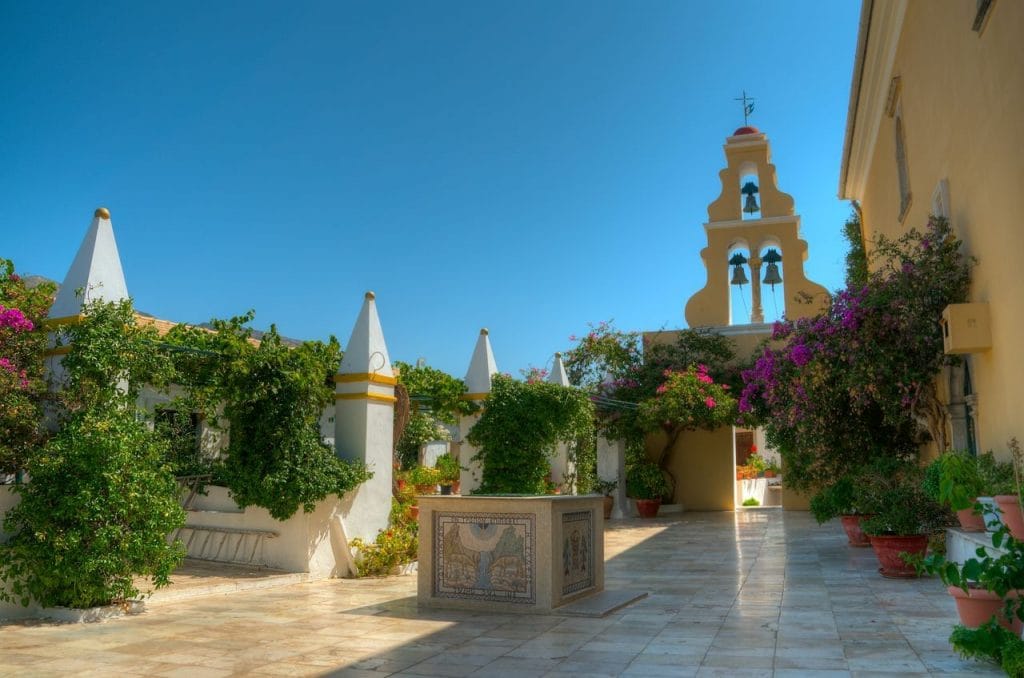
One of the most prominent monasteries on the island is the Holy Monastery of Panagia Paleokastritsa, located about 25 kilometers northwest of Corfu town. Perched in a breathtaking spot overlooking the bay of Paleokastritsa, this monastery was originally founded in 1225, although the current buildings date from the period of Ottoman rule. The monastery houses a small museum featuring Byzantine and post-Byzantine icons, sacred books, liturgical vestments, and religious relics. One particularly remarkable exhibit is the skeleton of a whale displayed in the museum, offering visitors a unique and memorable experience. The monastery celebrates its main feast days on August 15th, marking the Dormition of the Theotokos (Assumption of the Virgin Mary), and on the Friday after Easter, dedicated to the Life-Giving Spring.
Perhaps the most famous monastery across the island is the Holy Monastery of Panagia Vlacherna, situated at Kanoni, on a small islet connected to the mainland by a narrow strip of land. Dating back to the 17th century, this monastery is among the most photographed landmarks of Corfu, thanks to its picturesque location and proximity to the iconic Mouse Island (Pontikonisi). Dedicated to the Virgin Mary of Vlacherna, it serves as a pilgrimage site for the faithful, while also being a popular tourist destination. The monastery’s architecture, with its distinctive bell tower and whitewashed walls, impresses visitors and provides exceptional photographic opportunities, making it a symbol of Corfu’s cultural and religious identity.
Nestled within the modern urban fabric of Corfu town, the Holy Monastery of Platytera lies between the suburbs of Agios Rokos and Mantouki. Founded in 1741 by Chrysanthos Syropoulos, a hieromonk from Lefkada, and inaugurated in 1743, the monastery faced destruction during the first French occupation (1797–1799), but was quickly restored thereafter. It is dedicated to the Dormition of the Most Holy Theotokos and contains a shrine honoring Saints Chrysanthos and Daria, both martyrs. The monastery’s grounds are also home to the tomb of Ioannis Kapodistrias, the first governor of independent Greece, making it an important historical monument frequently visited by many who wish to pay homage to this pivotal figure in Greek history.
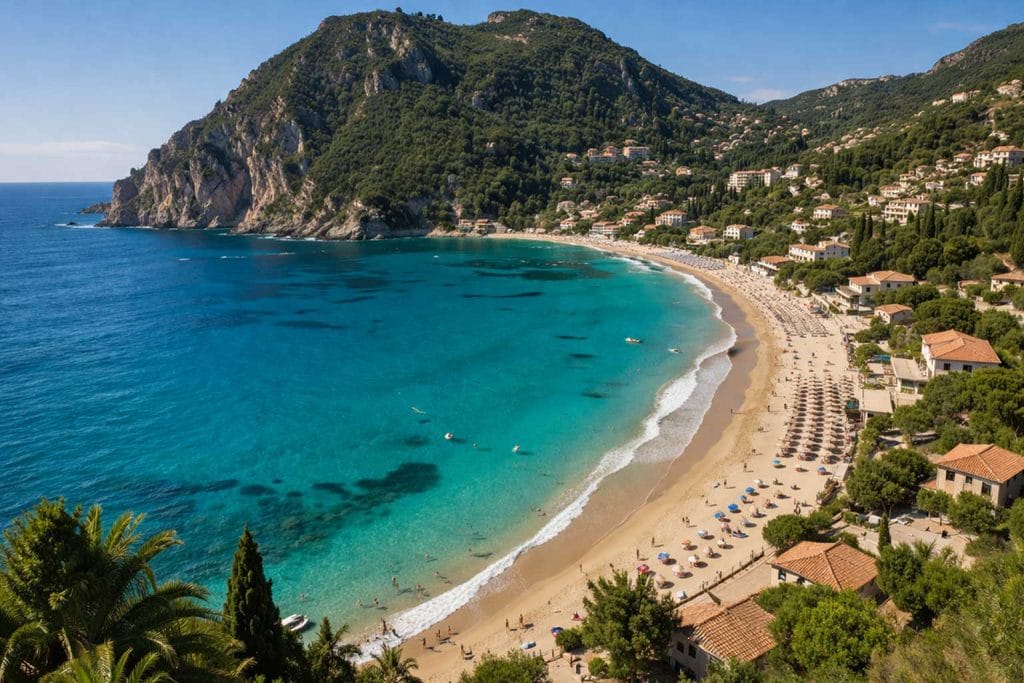
Further along Corfu’s western coast, near Glyfada, lies the Holy Monastery of Myrtidiotissa, set in an area of exceptional natural beauty. This monastery dates back to the 16th century and is surrounded by lush greenery near the sea. It is dedicated to the Virgin Mary Myrtidiotissa, often simply called Myrtiotissa by locals. The monastery houses numerous devotional icons, mostly representative of the Ionian Islands’ artistic style. The icon of the Theotokos of Myrtidiotissa is considered to be of exceptional artistic value and serves as a significant religious focal point for many faithful pilgrims.
The monasteries of Corfu are vital centers of religious and cultural heritage, offering visitors a unique experience of spirituality and historical reflection. Visiting these monasteries is not merely an act of devotion; it is an opportunity to discover the island’s rich history and unparalleled natural beauty. They provide a profound glimpse into the religious traditions and artistic achievements that have shaped Corfu throughout the centuries.
Beyond their spiritual significance, these monasteries stand as testimonies to Corfu’s diverse historical influences, from Byzantine and Venetian to French and British eras, each layer adding depth to the island’s cultural fabric. The architecture, artwork, and artifacts housed within these sacred walls reveal stories of resilience, faith, and artistic expression that have transcended time.