The Siege of 1716
The siege of Corfu in 1716 stands as one of the most significant historical events in the island’s history and more broadly in the context of the Greek-Turkish conflicts of the 18th century. This siege did not merely determine the fate of Corfu itself but also shaped the future of the Ionian Islands and the Western Balkans. The Ottoman Empire’s failure to capture the island set clear limits on their westward expansion and altered the geopolitical balance of the region.
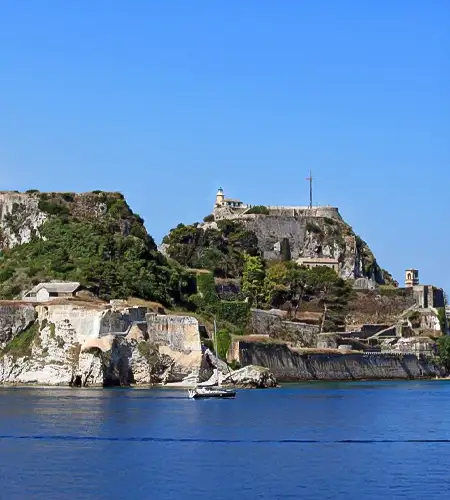
In 1714, the Ottoman Empire decided to renew its aggressive policy against Venice, which still controlled several islands and territories in Greece, including Corfu, a key naval and commercial stronghold. The main objective of the Ottomans was to reclaim the territories they had ceded with the Treaty of Karlowitz in 1699 and to strengthen their presence in the Adriatic Sea. Since 1386, Corfu, like the other Ionian Islands, had been under Venetian rule. Venetian dominance deeply shaped the island’s character, especially through the enhancement of its fortifications. At that time, Corfu was protected by two strong fortresses: the Old Fortress, dating back to medieval times, and the New Fortress, built by the Venetians with remarkable engineering skill.
Venetian Defense, Ottoman Retreat, Schulenburg’s Leadership, Saint Spyridon’s Miracle, and the Island’s Enduring Symbol of Resistance and Cultural Heritage
The story of the Siege
In the summer of 1716, a large Ottoman army, estimated between 30,000 and 40,000 men and led by Mehmed Pasha, began the siege of Corfu city. Accompanying the army was a capable Ottoman fleet. The Ottomans had already captured Dassia, and Gouvia along with other areas around the city, using the island as a base to attack the central administration. The city found itself in a difficult position: the defenders numbered about 3,000 soldiers, including mercenaries from various European states and local Corfiots, many of whom fought bravely. The Venetians understood that the defense would need to rely not only on the strength of the walls but also on the morale and courage of the defenders.
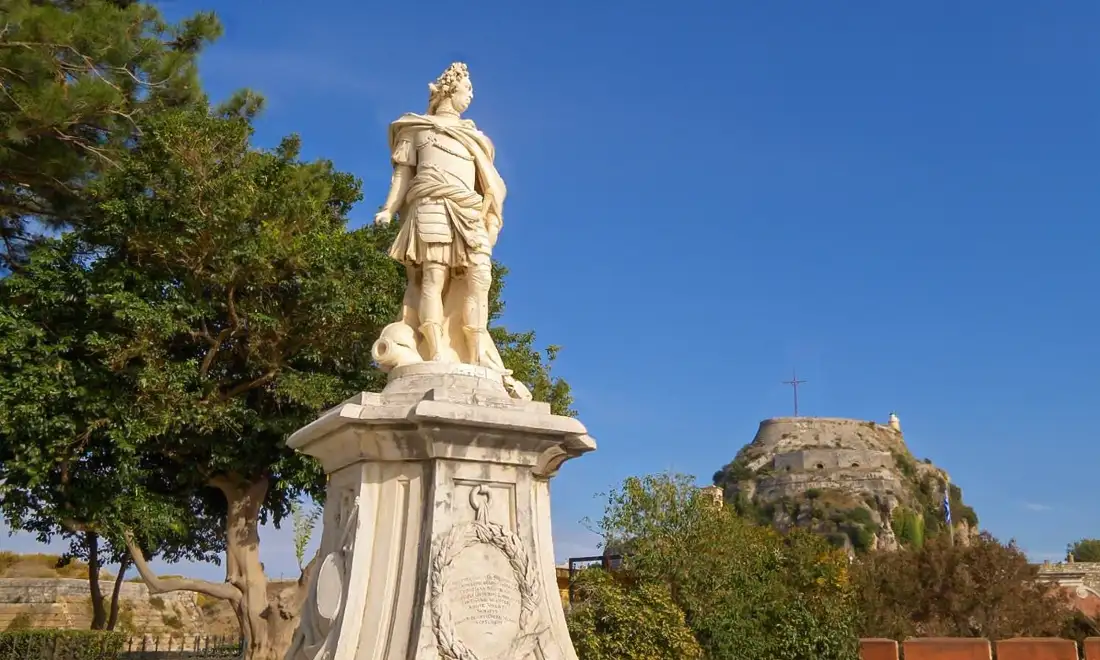
A decisive figure in the siege was Johann Matthias von der Schulenburg, a German general hired by Venice as the commander of the defense. Schulenburg was an experienced military officer with a background in the Austrian army and a profound knowledge of the art of war. Upon his arrival in Corfu, shortly before the siege began, he methodically organized the defenses, repaired fortifications, distributed supplies, and inspired confidence among the people and troops. His name became legendary in Corfu, regarded as the savior of the island.
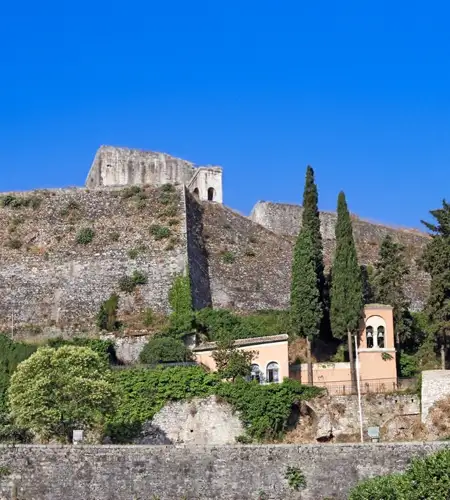
The siege began on July 8, 1716, and lasted approximately four weeks. The Ottomans launched continuous attacks, using both artillery bombardments and siege tactics. On many occasions, they managed to get close to the walls but were repelled each time with significant losses. The battle reached its climax on August 18 when the Ottomans launched a full-scale attack from both land and sea. Schulenburg struggled hard but successfully managed to repel the enemy forces. Storms also played a crucial role, damaging the Ottoman fleet, sinking ships, and causing panic. On August 20, the Ottomans decided to lift the siege and retreat. Their failure to capture Corfu was a strategic defeat for the Empire and greatly enhanced Venice’s reputation and the island’s defensive prestige.
The Corfiots attribute the salvation of the island to the divine intervention of Saint Spyridon, the protector saint of Corfu. According to local tradition, the Saint appeared on the walls as a monk with flames in his hands, striking fear into the Ottoman army. Since then, August 11, the day of this “miracle” has been honored annually with a procession of the sacred relics of Saint Spyridon through the historic center of the city.
The siege of 1716 is not just a historical event but a key element of Corfiot identity. It is commemorated every year with reenactments, exhibitions, and religious processions. Schulenburg remains a figure of honor and respect, while the fortresses that resisted the siege are now important monuments and symbols of the city. The resilience of Corfu’s defenders, the contributions of its citizens, and the union of religious faith and military strategy form a unique combination that has passed into the collective memory of the island’s inhabitants. This event symbolizes the spirit and endurance of Corfu and remains a source of pride and cultural heritage for generations.